
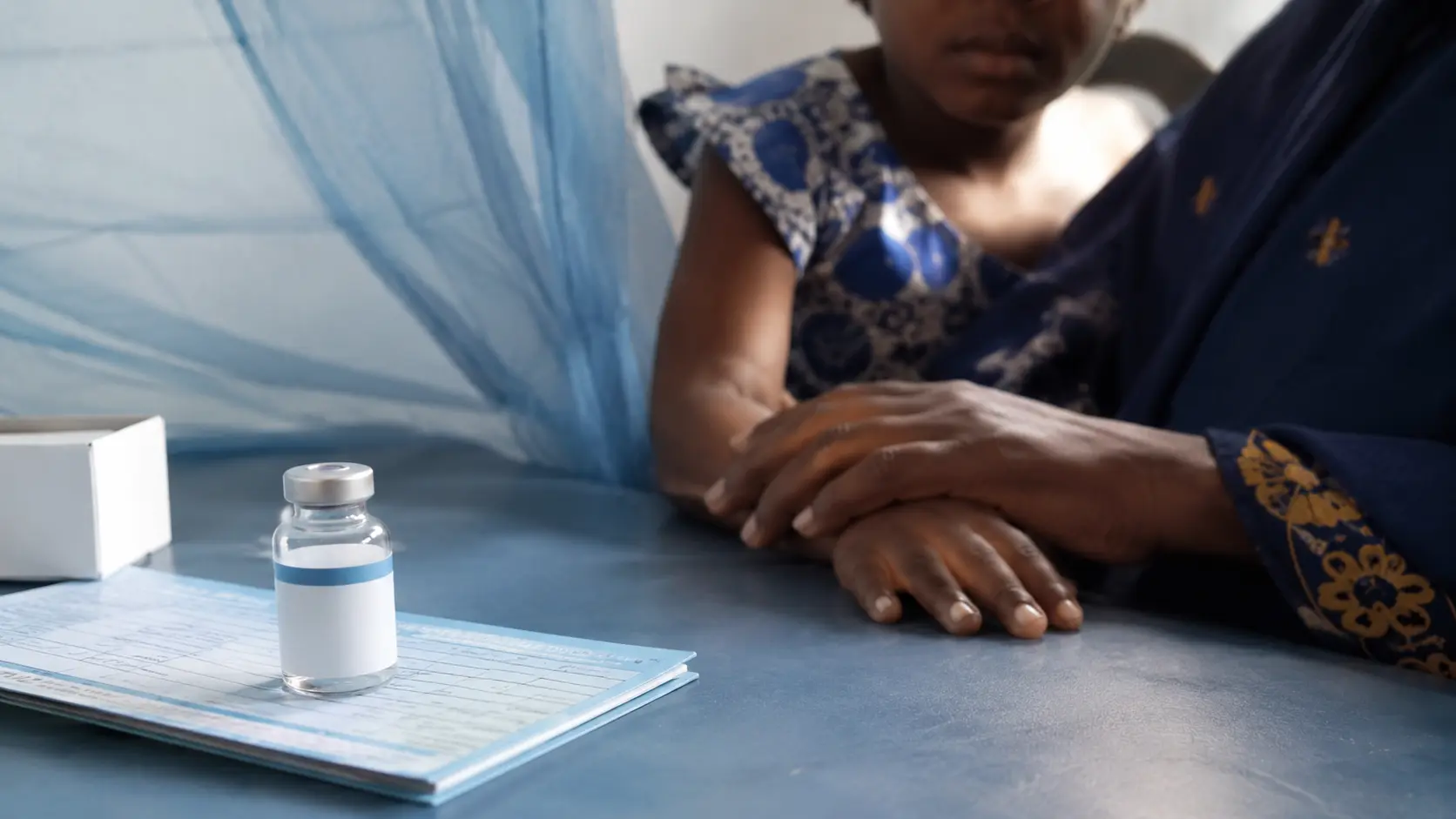
For generations, malaria prevention in much of Africa sounded almost identical: sleep under a treated net, clear stagnant water, test quickly and treat quickly. The advice saved lives. It also reflected an uncomfortable fact—for one of Africa's oldest and deadliest diseases, there was no vaccine routinely waiting for a child at the clinic. That has now changed.
The vaccine arrived. The disease did not disappear.
By January 2026, 25 African countries were offering malaria vaccines through childhood immunisation programmes. Gavi reported that more than 39 million doses had already been delivered, with more than 10 million children a year targeted for vaccination. Malaria vaccination is no longer an experiment waiting somewhere in the future. It is becoming part of ordinary childhood healthcare across Africa.
The scale of the disease explains both the excitement and the danger of expecting too much too quickly. The World Health Organization estimated 282 million malaria cases and 610,000 deaths worldwide in 2024. Its African Region carried about 94 per cent of cases and 95 per cent of deaths, and roughly three quarters of those African deaths were among children under five.
Vaccination does not make mosquito nets irrelevant. It does not make rapid diagnosis or effective treatment irrelevant. It does not mean a vaccinated child can no longer get malaria. The vaccines add another layer of protection to a system that still needs every other layer.
What exactly are African children receiving?
There are two malaria vaccines recommended by WHO: RTS,S/AS01 and R21/Matrix-M. Both are designed to help protect children against Plasmodium falciparum, the malaria parasite responsible for the overwhelming majority of severe disease and deaths on the continent.
WHO recommends malaria vaccination for children living in endemic areas, particularly where transmission is moderate or high. The programme generally involves four doses beginning from around five months of age, although countries may adapt the schedule to local patterns.
That matters because this is not a one-visit vaccine. A child receiving the first injection is beginning a schedule, not completing one. The vaccine can exist in a refrigerator, on a government timetable and in a national policy document. None of that protects the child who never receives the required doses.
Then came evidence that was difficult to ignore
Ghana, Kenya and Malawi were the first countries to introduce RTS,S through the Malaria Vaccine Implementation Programme beginning in 2019. That programme produced several years of real-world evidence from routine childhood vaccination rather than a controlled trial alone.
In May 2026, WHO highlighted results from a major evaluation. Across four years, researchers estimated that about one in eight deaths among vaccine-eligible children was prevented in areas where the vaccine was introduced.
Not one in eight malaria cases. One in eight child deaths. The case for malaria vaccination is no longer simply that antibodies improve or that clinical malaria becomes less likely in a trial population. There is now evidence that introducing the vaccine through African health systems can translate into children staying alive.
Africa moved quickly
Fourteen African countries introduced malaria vaccination in 2024. Seven more followed during 2025, while Guinea-Bissau joined in 2026. Nigeria was among the countries that began introductions in 2024.
That makes this moment unusual. Africa is not merely waiting for a scientific breakthrough developed somewhere else. The continent has become the place where one of the most consequential vaccine rollouts of this decade is being delivered at scale.
But scale creates its own problems. A successful pilot can be tightly supported. A national programme has to keep working through distance, staffing shortages, funding pressures, insecurity, misinformation and ordinary family life.
The next problem is not whether the vaccine works
It is whether enough children can receive it. WHO says most countries currently providing malaria vaccines are still operating below their desired national scale because of limited funding.
Imagine having a disease killing hundreds of thousands of African children, a recommended vaccine, sufficient global supply, countries asking for it and evidence that vaccination reduces child deaths—yet still being unable to reach every eligible child because the health system cannot scale quickly enough.
That is no longer primarily a scientific problem. It is a financing, logistics and political-priority problem.
A malaria vaccine can fail without the vaccine failing
A mother may live too far from the clinic. A clinic may run out of doses. A child may receive dose one and miss dose three. A health worker may be responsible for a catchment area too large to follow up. False information may reach a community before reliable information does. A government may begin in high-burden districts while millions of children elsewhere wait for expansion.
All of these situations can weaken the impact of a perfectly functional vaccine. Public health is full of interventions that work beautifully on paper and struggle when they meet distance, poverty and everyday life. The malaria vaccine will be no different. Its success depends not only on what is inside the vial, but on everything surrounding it.
And no, the mosquito net is not obsolete
One of the most dangerous outcomes of vaccine success would be families abandoning other malaria prevention measures. WHO continues to recommend malaria vaccines as part of a wider package that includes insecticide-treated nets, vector control, preventive medicines where appropriate, rapid testing and effective treatment.
The vaccine reduces risk. The net reduces risk. Early diagnosis reduces the chance that infection becomes catastrophic. Treatment reduces the chance that disease becomes death. The strongest malaria programme is the one in which those protections overlap.
The real story may be bigger than malaria
If countries can reliably identify eligible children, maintain vaccine supply and cold chains, deliver four-dose schedules, track coverage and communicate with families across difficult terrain, the infrastructure strengthened for malaria can support much more than malaria.
A clinic that can bring a child back for vaccination can also identify missed routine immunisations, nutritional problems and other health needs. A better-funded community health workforce can deliver more than one intervention. A stronger health-information system can count more than malaria doses.
The value of the rollout may therefore extend beyond the disease it was built to fight.
What should Africans expect next?
Not eradication next year. Not a continent suddenly free of malaria. And certainly not permission to stop using established prevention.
What Africans should expect is something quieter but potentially historic: fewer children developing severe malaria, fewer frightened journeys to emergency rooms in the middle of the night, fewer hospital beds occupied by preventable illness and—if vaccination reaches enough children—fewer families burying them.
For decades, malaria's enormous toll was discussed as though it were an unfortunate fact of geography. It never was. Today there are two recommended vaccines, tens of millions of delivered doses and evidence from African countries that vaccination can save children's lives.
The question is no longer whether the world can make a malaria vaccine. It did. The question now is how many African children will actually get to benefit from it.
Sources & further reading
CHA Health uses named, traceable sources. Links open the original institutional material.
- World Health OrganizationWorld malaria report 2025
- World Health OrganizationMalaria: global and regional burden data
- Gavi, the Vaccine AllianceMalaria vaccine support
- World Health OrganizationNew evidence confirms malaria vaccine saves child lives
- World Health OrganizationMalaria vaccines (RTS,S and R21): questions and answers
- World Health OrganizationMalaria Vaccine Implementation Programme

Read thoughtfully.
Respond constructively.
Loading discussion…