
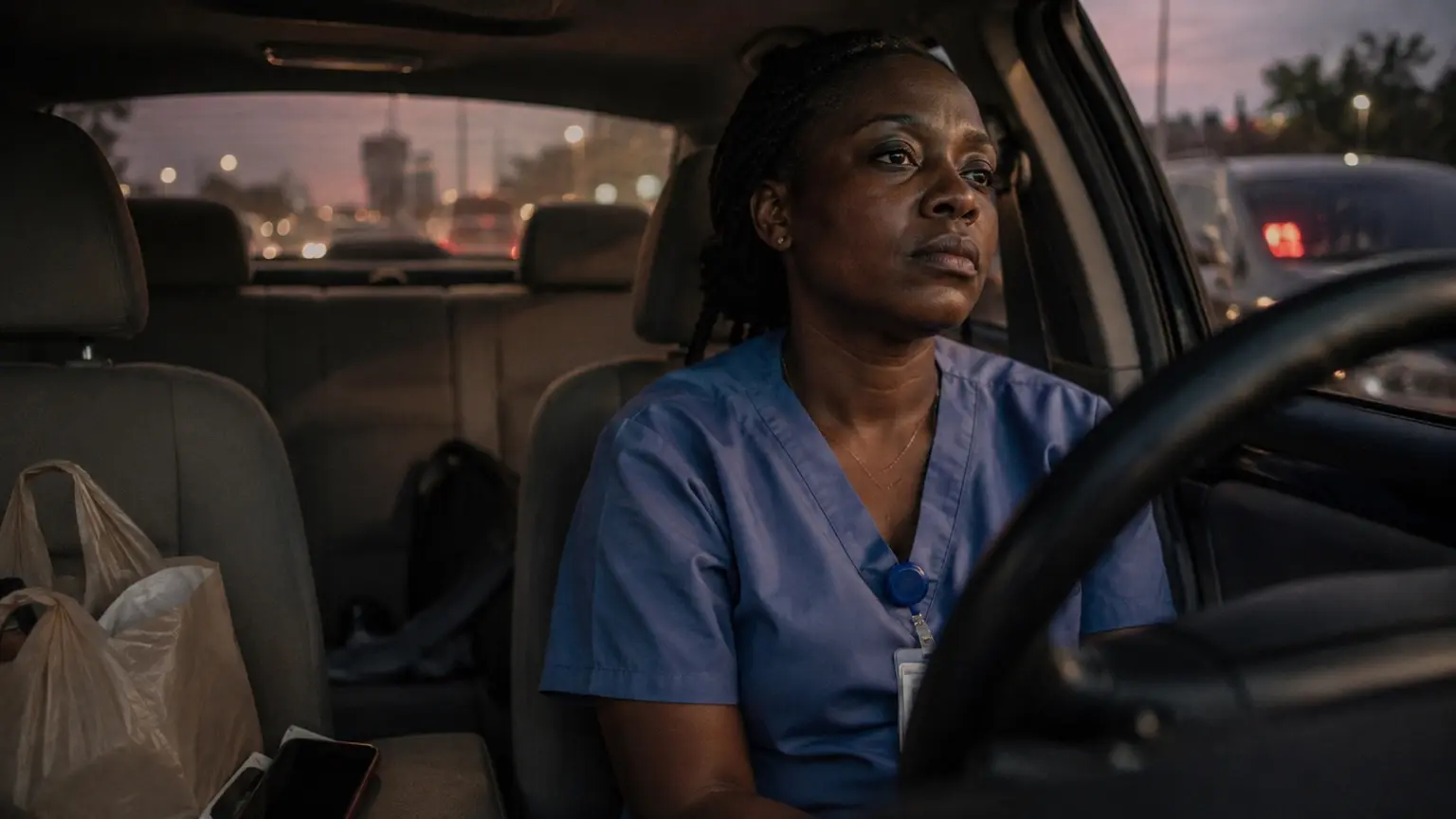
A bad day at work can follow anyone home. In healthcare, a bad day may have included the last hour of somebody’s life. That changes the meaning of ‘How was work? ’
Going from emergency to ordinary life
There are evenings after an unsuccessful resuscitation, an emergency that went badly, a patient who deteriorated unexpectedly, or a conversation with a family that will probably be remembered for years. Then there are the ordinary difficult days: too many patients, not enough hands, missed meals, a night without proper sleep, paperwork that continues after the clinical work is finished.
None of this is particularly visible outside the profession. We meet healthcare workers while they are working. We rarely think about what happens after they leave. For many of them, the answer is surprisingly ordinary. They drive home. They enter traffic. They buy something for dinner. They pick up their children. They answer WhatsApp messages. They sit with their families.
The transition can be strange. A person may spend an afternoon trying to stabilise somebody who is critically ill and spend the evening discussing what the family should eat for dinner. There is no formal process for moving between those two worlds.
Experience helps. So does training. Healthcare workers learn to remain useful when the situation around them is frightening. They learn what needs to happen first and what can wait. They learn to speak calmly when other people are panicking. What training cannot guarantee is that nothing will affect them afterwards.
A July 2026 study of 194 registered nurses at a specialist hospital in Kano State documented emotional exhaustion, anxiety, difficulty sleeping and concerns about burnout after patient deaths. Nurses described leaning on colleagues, religion or spirituality and simple relaxation to cope. Years of professional experience did not produce a significant difference in how strongly nurses were affected.
A nurse may have seen death before and still remember this patient. A doctor may understand perfectly why a patient died and still wish the outcome had been different. Clinical understanding and human reaction are not opposites.
Then there is simply being tired
Some of what follows healthcare workers home has nothing mysterious about it. They are exhausted.
A national study of 1,105 resident doctors in 59 Nigerian training institutions found that they worked an average of 106. 5 hours a week. It also found that 77. 3 per cent worked continuously for up to 24 hours during weekday calls, while more than half reported weekend calls lasting between 48 and 72 hours. They averaged about four hours of sleep while on call.
Those figures were published in 2022, but the question they raise remains uncomfortable: how much tiredness have we quietly accepted as part of becoming a doctor? Long hours have traditions attached to them. Older generations often trained in systems where endurance was considered part of the education. Younger doctors may hear some version of: we did it too.
There is value in learning to function under pressure. Hospitals cannot stop operating because it is midnight. But sleep is not a modern indulgence. Fatigue changes attention, patience and concentration. In healthcare, a tired person may still have to interpret a symptom, calculate a dose, notice a subtle change or decide whether something is an emergency.
The World Health Organization includes long hours, shift work, time pressure, inadequate support and excessive workload among occupational risks that can contribute to stress, fatigue and burnout. Its recommendations include appropriate staffing, breaks, schedule changes and better organisation of work.
There is a tendency to make the solution very personal: sleep more, exercise, learn to switch off, take care of yourself. All sensible advice. But an individual cannot ‘self-care’ their way out of a rota that repeatedly does not allow enough time for recovery.
What do you tell the people at home?
Medicine has its own language and its own rules around confidentiality. A healthcare professional cannot necessarily come home and recount every detail of what happened, nor would everybody want to. So the answer to ‘How was work? ’ may simply be ‘fine’. Not because it was fine. Sometimes because explaining it would mean revisiting it.
People recover differently. One person wants to talk immediately. Another wants an hour of silence. Someone sleeps. Someone cannot sleep. Someone phones a colleague, prays, watches television, cooks, or goes straight back into the responsibilities waiting at home.
This is why conversations about healthcare fatigue become unhelpful when every difficult feeling is immediately labelled burnout. WHO describes burnout as an occupational phenomenon arising from chronic workplace stress that has not been successfully managed. A person can also simply be grieving, badly sleep-deprived, shaken by an afternoon, angry about a preventable situation, or perfectly fine after one difficult day and affected by another months later.
There is no required emotional response to working in healthcare.
The cases that stay
Almost every experienced healthcare professional has cases they remember. Not every memorable patient died. Some survived against expectations. Some were funny. Some became memorable because of their family. Some arrived at exactly the right moment to change the way a person practised medicine afterwards.
And then there are the deaths. Healthcare workers may meet someone only briefly and still be present for moments that person’s closest friends never see: the final deterioration, a frightened question, the moment treatment stops working, the call to the family, the body after the room becomes quiet.
Then, very often, there is another patient. Grief does not necessarily receive an afternoon of its own. A nurse may leave one family crying and walk into another room smiling because the person in that bed has just received good news. Both reactions have to be genuine enough.
Research among early-career Nigerian doctors has documented substantial concerns around burnout, health and well-being, with both personal and systemic contributors in the working environment. That should concern anyone thinking about the future of healthcare in Nigeria, because a healthcare system cannot be healthier than the conditions under which its people are expected to work.
Maybe the question is simpler
We spend a great deal of time discussing how health professionals should treat patients. We should. Standards, competence and courtesy matter. A person who is ill or frightened deserves to be treated properly.
Perhaps there is room for another conversation alongside it: what kind of working life allows good healthcare workers to remain good at their jobs for twenty or thirty years? That question takes us beyond burnout seminars and wellness campaigns. It leads to staffing, duty hours, leave, psychological support after difficult events, team culture, and whether junior staff feel able to say they are exhausted.
There will always be difficult days in healthcare. No policy can remove death from a hospital or make every emergency end well. The point is not to make healthcare emotionally easy. It never will be. The point is to stop confusing unnecessary suffering with professional strength.
And maybe, when a healthcare worker gets home after one of those days, we do not always need an impressive thing to say. Sometimes ‘How was work? ’ is enough. And sometimes the better question is: ‘Do you want to talk about it? ’
Sources & further reading
CHA Health uses named, traceable sources. Links open the original institutional material.
- BMC Palliative CareNurses’ grief after patient loss: coping strategies and emotional impact in a Nigerian tertiary hospital
- PubMedNigerian resident doctors’ work schedule: A national study
- PLOS ONEHealth, well-being, and burnout amongst Early Career Doctors in Nigeria
- World Health OrganizationPsycho-social risks and mental health: occupational hazards in the health sector
- World Health OrganizationMental health at work
Read thoughtfully.
Respond constructively.
Loading discussion…