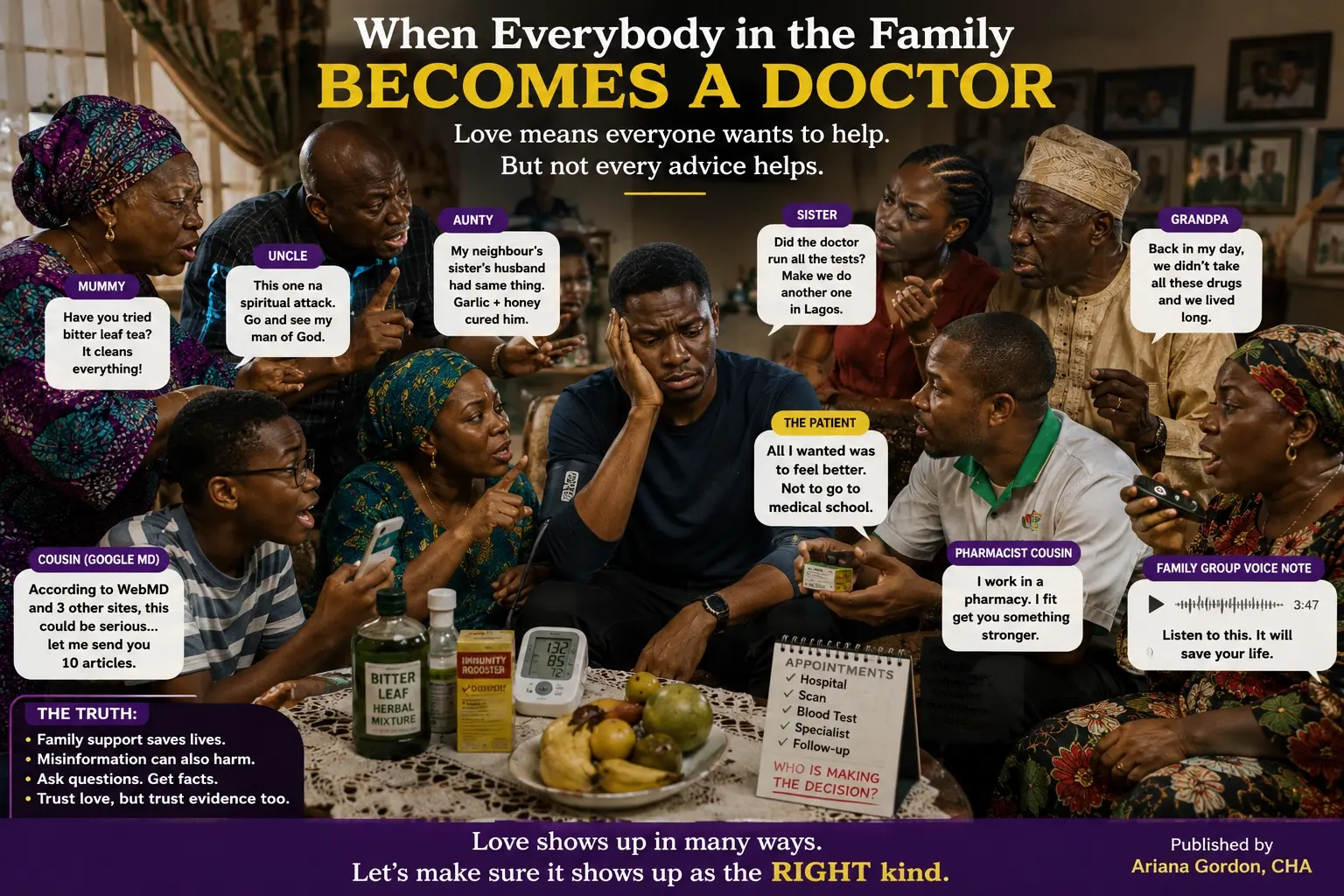
The doctor has barely finished explaining what is wrong before the other consultation begins. You call your mother. She calls your aunt. Your cousin sends the name of a drug. By evening, you have one diagnosis and approximately seven treatment plans.
Nobody really makes health decisions alone
Somebody recommends fasting. Somebody recommends eating more. Someone knows a very good doctor in Lagos. Someone knows an even better man in the village. Your younger cousin has Googled the condition and would now like to discuss your prognosis. Somewhere in all of this is the original instruction from the person who actually examined you.
This can be funny when the illness is minor. It becomes considerably less funny when it is not.
We often imagine healthcare as a private exchange between a patient and a professional: the doctor explains, the patient understands, the patient goes home and follows the plan. That is a wonderfully tidy description of something that is rarely tidy. People go home to other people, and other people have opinions.
Researchers call part of this the lay referral system—the network of relatives, friends, neighbours and other non-professionals people consult when deciding what an illness means and what should be done about it. A 2025 study in Nigerian urban communities found that people used small networks of trusted family and friends. Those conversations sometimes encouraged appropriate care and sometimes produced unhelpful advice.
Before most of us see a cardiologist, we see our mother. Before a child reaches the clinic, somebody in the house has usually decided whether the fever is serious. Medicine happens inside society. The question is what happens when love becomes medical authority.
‘It worked for me’
This may be one of the most persuasive sentences in healthcare. Not ‘clinical trials have demonstrated’ or ‘the evidence suggests’. Just: it worked for me.
Your aunt took it and got better. Your colleague’s mother used it. Your neighbour had the same symptoms. There is something enormously convincing about a person you trust standing in front of you as evidence.
The problem is that two people can have similar symptoms and completely different illnesses. Chest discomfort can be indigestion or a heart problem. A severe headache and abdominal pain can have many causes. A cough disappearing after an antibiotic does not establish that the antibiotic cured it.
When people recover naturally, whatever they happened to be taking can receive the credit. Personal experience becomes family knowledge. Family knowledge becomes advice. Advice becomes tradition. After enough repetition, nobody remembers where the original claim came from—only that we have always used this.
Human beings have always learned from one another. The difficulty is that medicine contains too many variables for one person’s experience to function as another person’s prescription.
Family advice can be remarkably powerful
Long before health misinformation became associated mainly with algorithms, research among Lagos residents found that family and friends influenced 78. 4 per cent of respondents who used herbal preparations. Health information does not need a million followers to be influential. Sometimes it needs one trusted aunt.
During the COVID-19 period, a Nigerian study of self-medication in Umuahia found that family members were the most commonly reported source of information, accounting for 39. 4 per cent.
A stranger on the internet can be dismissed. Your mother is different. She fed you, took you to hospital when you were six and has accumulated decades of experience being alive. If she tells you not to take something because she believes it harmed someone she knows, you receive that information wrapped in trust.
Trust is powerful medicine, even when the medical advice attached to it is wrong.
Then WhatsApp joined the family
The family doctor used to be metaphorical. Now he can send voice notes. Digital communication has removed distance between a claim and an audience. A message can begin in a place nobody in the family knows and arrive in twenty phones by breakfast.
It often comes with familiar language: Doctors don’t want you to know this. Please share, you may save a life. Forward urgently. Sometimes there is a man wearing a white coat. Sometimes there are impressive biological words. Sometimes the speaker is a health professional discussing something far outside their expertise. Sometimes nobody knows who the speaker is at all.
WHO uses the term infodemic for environments where enormous amounts of information—including false or misleading information—circulate and make reliable guidance harder to identify. Misinformation can create confusion, encourage risky behaviour and undermine trust in health authorities.
WhatsApp did not invent our instinct to ask trusted people what to do. It industrialised it. Advice that once travelled between four people at dinner can now travel between four thousand families before lunch. Because it arrives from someone we know, the messenger lends credibility to a message they did not create.
The herbal mixture in the kitchen
Any serious Nigerian discussion of family health advice eventually reaches traditional and herbal medicine. This is where the conversation often becomes unnecessarily insulting. People have used plants medicinally for centuries, and some modern medicines have origins in compounds found in nature. The issue is not that something becomes useless because it is a plant.
The useful questions are the same ones we should ask of any treatment: What is in it? In what amount? What does it do? What evidence supports the claim? What can it interact with? What happens if somebody takes too much, or if it delays treatment that was needed?
A study of 453 patients with type 2 diabetes in Lagos found that 67. 3 per cent reported using herbal medicines. More than a third were using herbal and conventional treatments at the same time. Among those using herbal medicines, 67. 5 per cent had not told their physician.
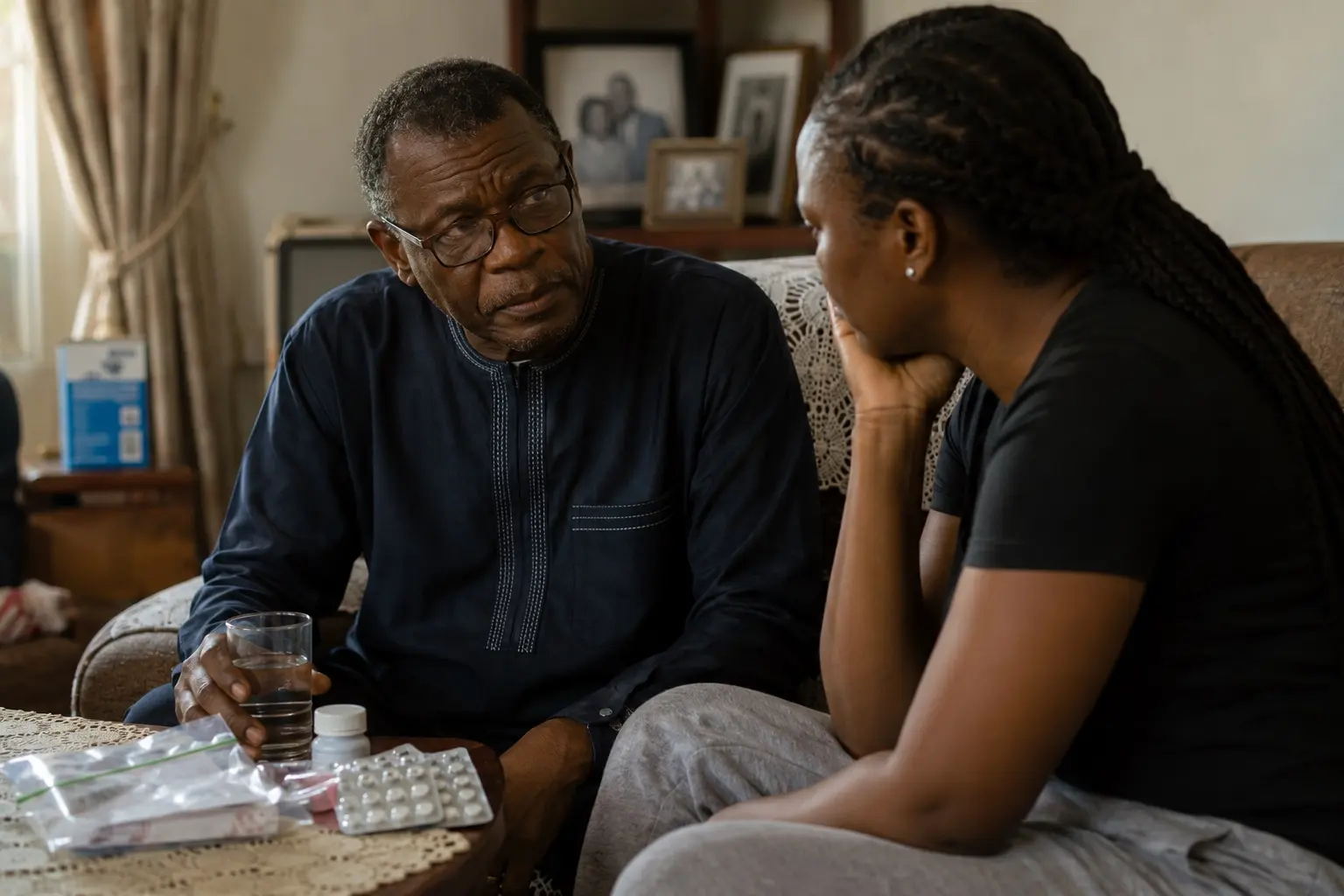
That creates a strange situation. A doctor may be making decisions without knowing everything the patient is taking. The patient may expect disapproval. The doctor may never ask. Everyone continues with incomplete information.
A 2026 multicentre study involving 1,250 outpatients at three Nigerian tertiary hospitals found current herbal-medicine use in almost half of participants, with use more likely among people living with chronic disease. Pretending this is fringe behaviour would be pointless. The more useful conversation is how patients can tell clinicians what they are actually taking without expecting ridicule.
Doctors are competing for trust too
It would be convenient to make this entire story about troublesome relatives and misinformation. That would let the healthcare system off rather easily. People look elsewhere for answers partly because elsewhere sometimes gives them something the clinic did not: time, an explanation, certainty and attention.
A doctor may have twenty people waiting. Your aunt has all evening. A consultation may end with ‘take this twice daily and come back in two weeks’. Your family will ask what caused it, how long the medicine lasts, what happens if it does not work, whether another test is needed and whether the doctor heard about that other symptom.
Sometimes the uncomfortable truth is that the patient left without understanding. Information vacuums do not remain empty for long. Someone fills them.
A patient who understands why they are taking a treatment is better equipped when someone later tells them to stop it. A patient who understands expected side effects can respond differently when a relative declares that the medicine is ‘destroying their body’. Trust cannot simply be demanded because somebody has a medical degree. It is built in the consultation too.
The family is not the enemy
For all the jokes about everybody becoming a doctor, families probably keep an enormous number of people alive. They notice that Dad has not been himself, Mummy is breathing differently, someone has lost too much weight, a cough has gone on too long or medicine has not been taken.
They provide transport, contribute money, sit through appointments, remember details the patient forgot, collect prescriptions and care for people after surgery. They are often the reason somebody seeks care in the first place.
The same Nigerian research on informal advice networks found that family and friends could encourage timely care as well as offer unhelpful advice. The answer is not to remove families from health decisions. The challenge is helping families recognise where experience ends and expertise needs to begin.
The cousin studying biochemistry
Every family appears to have somebody whose qualifications expand during an emergency. One semester of anatomy can become an unofficial residency. Working in a pharmacy becomes pharmacology. Knowing a nurse becomes knowing medicine. Reading three articles becomes research.
This is mostly harmless until confidence outruns knowledge. Healthcare is becoming more specialised precisely because knowing a little about the body reveals how much there is to know. A cardiologist and dermatologist are both doctors; neither would casually assume expertise in the other’s specialty.
The internet has made medical information more available than ever. That is a good thing. Patients should be informed and families should ask questions. But access to information and the ability to interpret it are not identical skills.
WHO recommends asking basic questions before trusting or forwarding health claims: Who produced this? What is the source? Is the source reliable? Is the claim consistent with current evidence from credible health authorities? Perhaps we need an additional Nigerian question: Who sent this to the family group, and where did they get it from? ‘Uncle Tony forwarded it’ is not a source.
Sometimes everybody is trying to help
Most bad family medical advice is not given maliciously. It is given because somebody is afraid. A person they love is sick. Doing nothing feels unbearable, so they search, call people, suggest things, bring things and try to create certainty where there is not much.
Advice can become a way of expressing love when nobody knows what else to do. That deserves compassion. It also deserves boundaries, because caring deeply about somebody does not make every idea safe.
Sometimes the most helpful family member is not the person with another treatment. It is the one who writes down the questions, goes to the appointment, makes sure the patient understood, asks the doctor about the herbal mixture, notices that a condition is worsening and says ‘we’re not waiting until tomorrow’, or hears a spectacular WhatsApp claim and resists pressing Forward.
After the family meeting
Eventually a decision has to be made. The medicine will be taken or it will not. The test will be done or postponed. The operation will happen or another opinion will be sought. The home remedy will be tried, the hospital visit delayed, or someone will decide this has gone beyond what the family can manage.
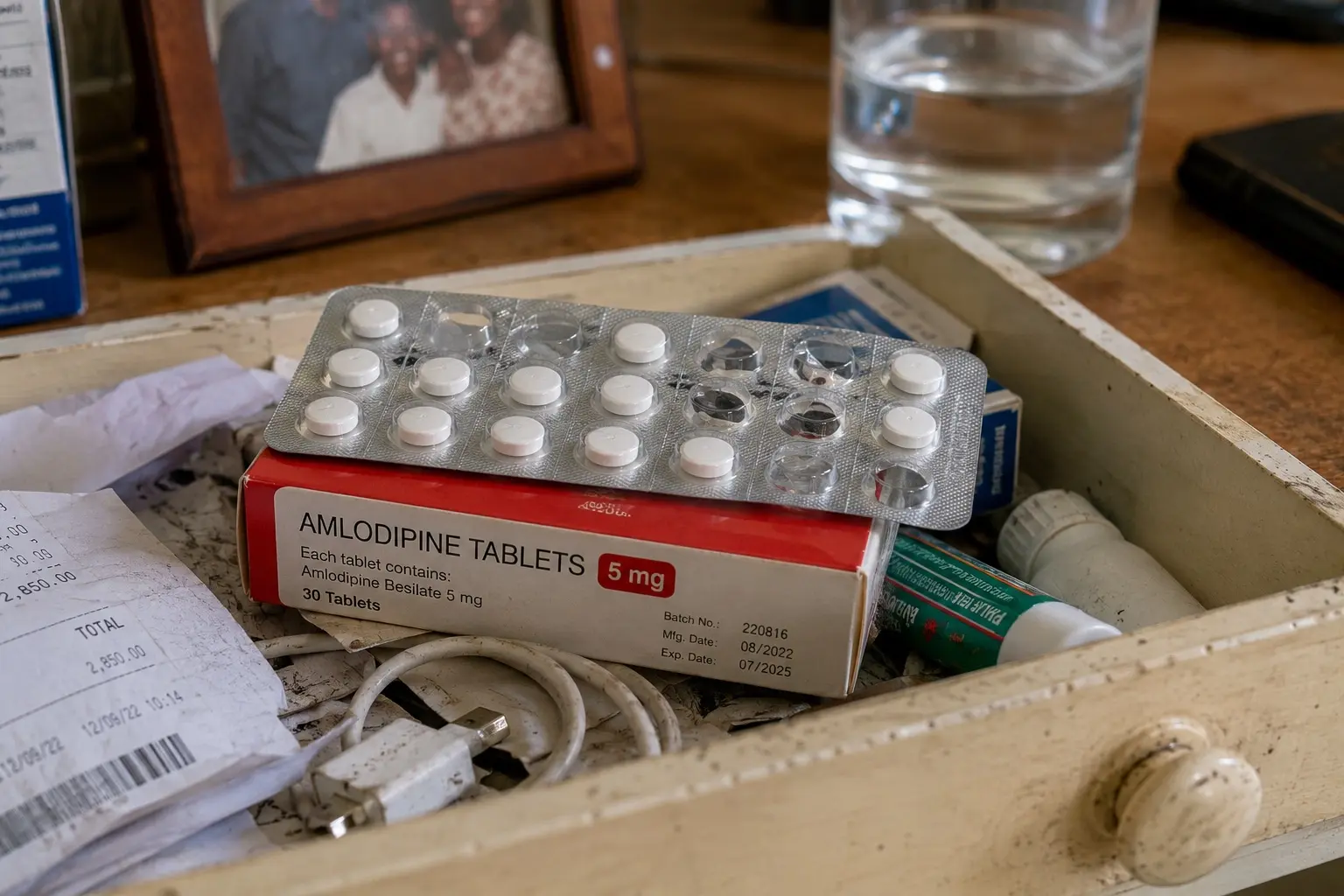
It is reasonable to ask questions about medical advice. Get another qualified opinion when necessary. Ask what a medicine is for and about side effects. Tell the doctor about every supplement and herbal preparation. Ask whether alternatives exist. Doctors can be wrong and health systems can fail people. Patients have every right to participate in decisions about their bodies.
But scepticism should not mean that every opinion suddenly carries equal weight. Your aunt may know you better than your doctor ever will. That matters. Your doctor may understand the disease in a way your aunt does not. That matters too.
There is a difference between saying ‘I heard about something; ask your doctor about it’ and saying ‘stop what the doctor gave you; I know what you should take’. It is a surprisingly small sentence between the two. It can be a very large difference in what happens next.
Sources & further reading
CHA Health uses named, traceable sources. Links open the original institutional material.
- PubMedNavigating the Lay Referral System for Treatment-Seeking Decisions During Illness in the Digital Age
- PubMedHerbal medicine use among urban residents in Lagos, Nigeria
- PubMedHerbal medicine use among Type 2 diabetes mellitus patients in Nigeria
- PubMed CentralThe role of outpatients’ medical history on current herbal medicines use: a cross-sectional multicenter study
- PubMedPrevalence, pattern and predictors of self-medication for COVID-19 among residents in Umuahia
- World Health OrganizationInfodemic
- World Health OrganizationDisinformation and public health
- World Health OrganizationGlobal principles for identifying credible sources of health information on social media
Read thoughtfully.
Respond constructively.
Loading discussion…