
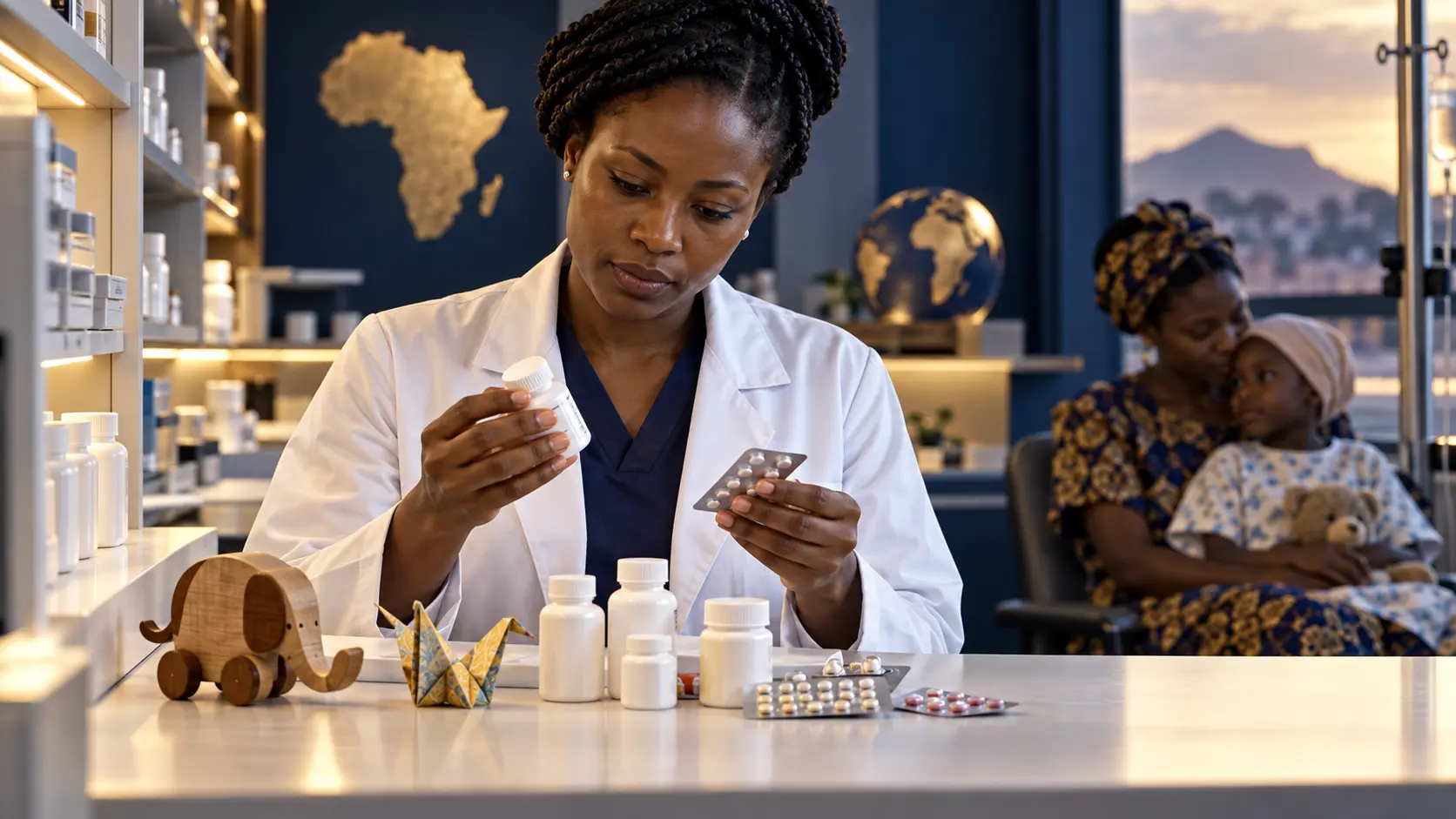
A medicine can be on an essential list and still fail a child. It may be unavailable, unaffordable, difficult to dose, unsuitable to swallow or supplied inconsistently enough that treatment is interrupted. On 4 September 2026, WHO announced a regulatory step aimed at changing that reality.
This is a medicines announcement, not a new cure
The World Health Organization has issued its first invitation for manufacturers of childhood-cancer medicines to submit products to the WHO Prequalification Programme. The invitation covers twelve essential medicines.
Six were selected because children need more suitable formulations: cyclophosphamide, etoposide, mercaptopurine, methotrexate, procarbazine and temozolomide. Six more were selected because programmes face documented supply or access gaps: pegaspargase, asparaginase, preservative-free hydrocortisone, dactinomycin, vincristine and cytarabine.
No new drug was discovered on 4 September. No treatment centre received stock merely because WHO published an announcement. The breakthrough is regulatory and practical: a route now exists for manufacturers to have priority products evaluated for quality so procurement organisations and countries can buy with greater confidence.
Children are not small adults
Cancer treatment often requires doses calculated from a child's body size, diagnosis and treatment protocol. The dose can change during therapy. A tablet or capsule designed for an adult may not allow the flexibility, acceptability or safe handling required for a young child.
In 2025, WHO published target product profiles describing the minimum and preferred characteristics for child-friendly versions of the six formulation priorities. The profiles address dose, administration, stability, safe handling, affordability and suitability for resource-limited settings.
This work sounds technical because it is technical. But families experience it through ordinary difficulties: a child who cannot swallow the available tablet, a caregiver trying to follow a complicated instruction, a medicine that requires storage a clinic cannot guarantee, or a dose that cannot be measured reliably with the product on the shelf.
Age-appropriate design is therefore part of medicine safety. It is not decorative packaging.
The survival gap is enormous
WHO estimates that about 400,000 children and adolescents develop cancer each year. Close to 90% live in low- and middle-income countries, where survival remains below 30%. In many high-income countries, survival exceeds 80%.
Those figures do not mean every child in a lower-income country faces the same prognosis or that every childhood cancer has the same outcome. They do reveal a profound inequality in diagnosis, treatment, supportive care and medicine access.
A child does not survive cancer because one medicine exists somewhere in the world. Survival may depend on recognising symptoms early, obtaining an accurate diagnosis, using the correct risk-adapted protocol, having each medicine available on schedule, preventing and treating infection, providing blood products and managing complications across months or years.
The medicines are one part of that chain. They are also a part that can break repeatedly.
What prequalification is supposed to solve
When WHO prequalifies a medicine, it assesses evidence about quality, safety and efficacy and inspects relevant manufacturing arrangements. The process does not replace a country's own regulatory authority, but it provides a trusted reference for international procurement and national programmes.
That can expand the pool of quality-assured products, give manufacturers clearer targets and help large purchasers create a more dependable market. For medicines with small or fragmented commercial demand, that market signal matters.
It can also reduce a dangerous compromise: programmes should not have to choose between no product and a product whose quality is difficult to verify.
But prequalification cannot create manufacturing capacity overnight. A successful submission must still be followed by production, financing, procurement, importation, national authorisation, distribution and clinical use.
Reliable supply is part of treatment
Cancer medicines are not interchangeable groceries. Treatment protocols depend on particular combinations and timing. A stock-out can force clinicians to delay, substitute or redesign care, sometimes without the evidence or options available in better-resourced systems.
Some medicines on WHO's new list have faced persistent global supply problems. A shortage can begin with too few manufacturers, a factory problem, a shortage of raw materials or a market considered too small to attract investment. By the time the problem reaches a family, it looks simpler: the medicine is not there.
This is why WHO paired formulation priorities with medicines selected specifically for access and supply gaps. A child-friendly product has little value if it cannot be purchased. A plentiful product has limited value if it cannot be dosed safely for the child who needs it.
The Global Platform is trying to connect the pieces
The prequalification initiative supports the Global Platform for Access to Childhood Cancer Medicines, a collaboration involving WHO and St. Jude Children's Research Hospital with UNICEF and the PAHO Strategic Fund.
The platform aims to provide uninterrupted supplies of quality-assured medicines in low- and middle-income countries and is expected to reach approximately 120,000 children. Early country deliveries and enrolment efforts demonstrate what pooled procurement and coordinated support can make possible.
That number should not be mistaken for global coverage. An estimated 400,000 children develop cancer each year. The platform is a significant programme operating inside a much larger unmet need.
What this means for Nigeria and other African countries
The 2026 invitation does not announce that Nigeria has received all twelve medicines or that treatment is free. It creates an opportunity countries and partners can use if they align diagnosis, treatment protocols, procurement, regulation and financing.
For African health systems, the essential questions are practical. Which childhood cancers can be diagnosed accurately? Which hospitals have paediatric oncology teams? Are pathology, imaging, surgery, radiotherapy, blood products and infection management available? Can a child complete treatment without the family being financially destroyed?
Medicine access is necessary, but a box arriving at a central warehouse is not the same as a child completing treatment. Data systems must track stock and outcomes. Clinicians need appropriate protocols and training. Families need navigation and social support. Governments need financing that lasts beyond a launch announcement.
The most honest measure will come later
A regulatory invitation is judged first by manufacturer participation: are suitable products submitted and successfully assessed? It is judged next by procurement: do quality-assured products become available at sustainable prices? The final measure belongs to patients: are fewer children missing doses, abandoning treatment or dying from cancers that are curable elsewhere?
The September announcement is important because it moves from recognising a gap to building a pathway manufacturers can enter. It should be celebrated at the correct scale.
This is not the day childhood cancer became easy to treat. It is the day twelve long-standing medicine problems received a more concrete route toward quality assurance and supply—and the beginning of the work required to make that route reach a child.
Sources & further reading
CHA Health uses named, traceable sources. Links open the original institutional material.
- World Health OrganizationWHO advances access to quality-assured, child-friendly cancer medicines
- WHO PrequalificationFirst invitation to manufacturers of childhood-cancer medicines for WHO prequalification
- World Health OrganizationTarget product profiles for six priority paediatric cancer formulations
- World Health OrganizationGlobal Platform for Access to Childhood Cancer Medicines
- World Health OrganizationChildhood cancer: key facts

Read thoughtfully.
Respond constructively.
Loading discussion…