
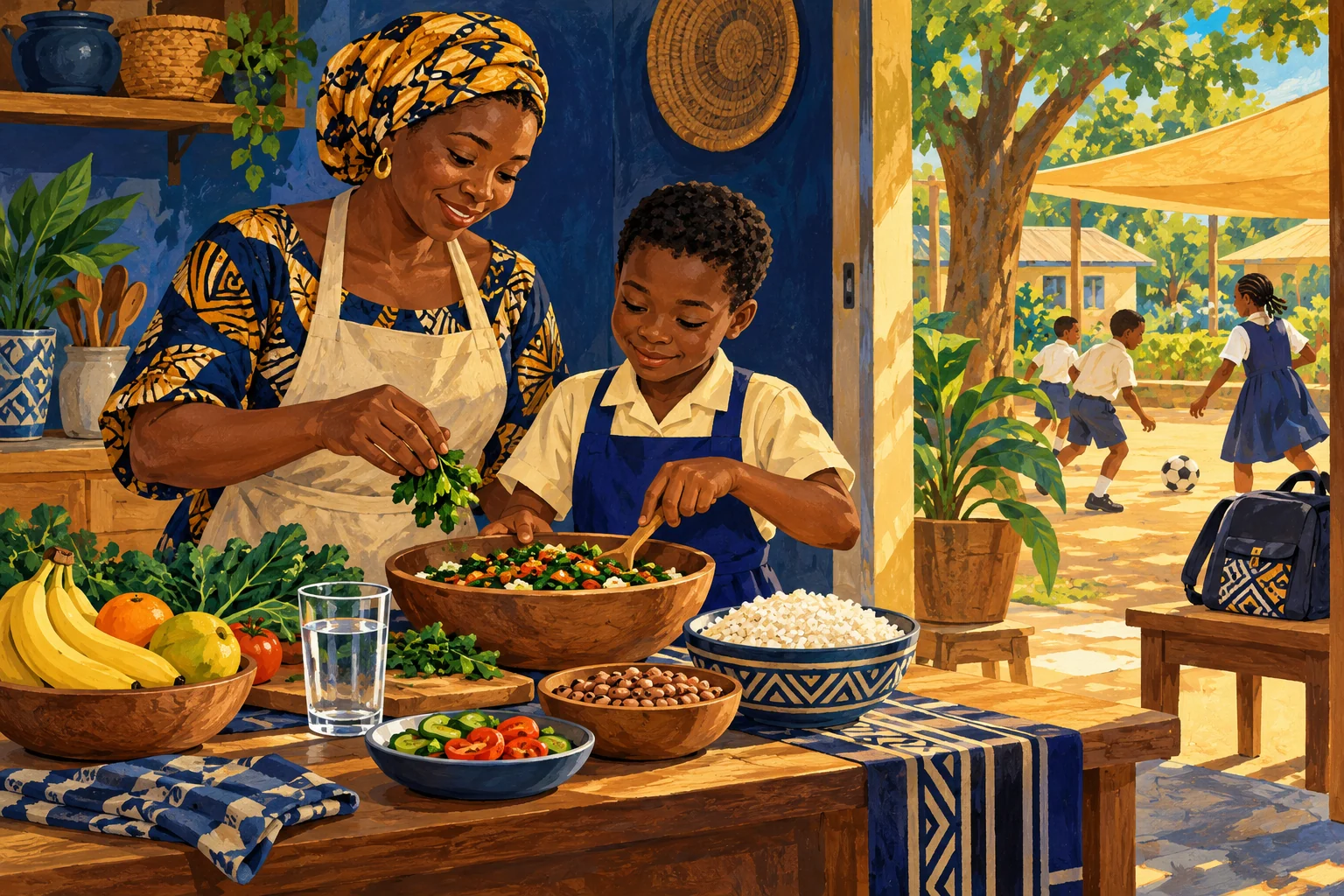
Tell a child to eat differently and you have given an instruction. Ask what food the household can afford, what the school sells and where the child can safely play, and you have begun to understand whether that instruction can become a real choice.
What changed on 7 October
WHO released its first global guidelines on the integrated management of obesity in children and adolescents on 7 October 2026. The two documents cover children from 29 days to under 10 years, and adolescents aged 10 to 19. They are guidance for care, not a new Nigerian law or an instruction for parents to start treatment at home.
The documents put the issue inside ordinary health services. The childhood guideline describes integrated care through primary healthcare, adapted to children and their families. The adolescent guideline also addresses care pathways, health and functioning. Their shared direction is to make help available over time, rather than leave a family with a single comment about weight.
For Nigeria, that is a useful starting question: if a parent is concerned, where does the child receive a respectful assessment, and what support can the family realistically return for? A guideline cannot answer those local service questions by itself.
Understand the number before using it
WHO's current fact sheet estimates that 170 million children and adolescents aged 5 to 19 were living with obesity in 2024, within a larger group of about 400 million living with overweight. These are global estimates for a specified age range. They do not establish how common either condition is among Nigerian children.
The fact sheet also describes obesity as a chronic disease shaped by interacting biological, behavioural, social and environmental factors. That explanation matters because appearance reveals very little about the mixture affecting an individual child.
A health article should resist converting a striking worldwide total into a claim about a Nigerian classroom. Local decisions need data with a clear year, age group, method and definition. Global evidence can establish the importance of the issue while leaving honest questions about its precise distribution in Nigeria.
What the new guidance says about weight loss medicines
WHO's announcement strongly recommends structured support involving diet, physical activity and behaviour change. It does not recommend obesity medicines, surgery or weight loss devices for children aged 0 to 9. For adolescents aged 10 to 19, approved medicines may be considered when a supervised, combined lifestyle programme has not achieved the intended result. Surgery is considered only under strict conditions for severe obesity.
That is not permission to give a child an adult's injection, buy a slimming product online or make a decision from a social media video. An individual decision needs an appropriately qualified clinical team, age appropriate assessment and follow up. Regulatory approval and availability also need to be checked in the country concerned.
The announcement describes care as supporting health, functioning and well being, with attention to mental health. A useful consultation should therefore ask more than how much weight has changed. It should also ask whether the child is being supported and what obstacles the family is facing.
The school environment belongs in the consultation
WHO's January 2026 school food guideline recommends improving the foods and drinks available in schools, using standards alongside measures that make healthier choices easier. It also calls for monitoring and enforcement. The principle is practical: the environment should support the advice children receive.
Applied to Nigeria, this suggests a better set of questions for school leaders. What is sold through the canteen and around school activities? Is safe drinking water available? Can nutritious options compete on price? Does a packed lunch policy match the realities of household budgets? These are questions to investigate locally, not claims that every Nigerian school has the same problem.
Parents should be able to see the relevant policy and understand who checks it. A nutrition lesson loses credibility when the rest of the school day consistently pushes in another direction. Making a healthier choice convenient should be part of the institution's work.
A food choice is also a commercial environment
UNICEF's 2025 Feeding Profit report examines how marketing and unhealthy food environments shape children's diets. It draws attention to digital promotion that may be difficult for caregivers to see. Its global findings describe a commercial context; they do not prove what a particular Nigerian child watches or eats.
The relevant policy question is how much responsibility should rest on a child facing a carefully designed sales system. A family can discuss advertising, but parents cannot individually redesign the platforms, prices and retail practices surrounding every meal.
CHA Health's view is that an honest debate should include those commercial decisions. It should ask which products receive prominent placement, what claims are allowed, and whether child protection rules are being monitored. Calling everything personal choice leaves important choices made by adults and businesses outside the frame.
Nutrition advice must remain possible to use
WHO's healthy diet guidance emphasises adequacy, balance, moderation and diversity, with room for local foods and cultural practices. Whole grains, pulses, vegetables and fruit can be part of that pattern. A useful Nigerian explanation should work with familiar foods and an actual budget, rather than present an expensive imported menu as the definition of health.
It should also avoid turning this discussion into a reason to overlook hunger. UNICEF's June 2026 Nigeria humanitarian report continues to document urgent needs, including nutrition support. Responding to inadequate nutrition and improving food environments belong within the same concern for children's health.
A household may need help with affordability before a list of preferred foods becomes useful. Clinicians and public agencies should ask what can be changed now, what requires support and what responsibility belongs to the wider system. Advice should make the next step clearer, rather than leave a parent feeling they have failed a test they could not afford to take.
What a parent can ask without making the child a project
If you are concerned about a child's growth, ask a qualified clinician for an assessment using age appropriate growth measures. WHO's definitions for children depend on age and, for the school age reference, BMI for age; adult BMI cut offs should not simply be applied to children.
The appointment can become more useful if the family leaves with a small, agreed plan and a review date. The child should understand the conversation in language appropriate to their age. Schools and relatives also need to avoid public weigh ins, teasing or commentary that turns a health concern into an identity.
- How was the assessment made, and what does it tell us about this child's health?
- Which changes are realistic for our household, and what support is available?
- Are there other medical or emotional concerns that need assessment?
- How will we review progress, and what should prompt an earlier visit?
The outcome should be a healthier childhood
The strongest use of WHO's guidance would be to make care easier to reach and the surrounding environment easier to live in. For Nigeria, that means asking how primary care, schools, food policy and families will work together, with responsibilities that can actually be checked.
A child deserves to learn, move, eat, play and obtain care without becoming a public argument about discipline. The adult systems around that child should be willing to accept at least as much scrutiny as the child has been receiving.
Sources & further reading
CHA Health uses named, traceable sources. Links open the original institutional material.
- World Health Organization · 7 October 2026First global guidelines on child and adolescent obesity
- World Health Organization · 7 October 2026Integrated management of obesity in children
- World Health Organization · 7 October 2026Integrated management of obesity in adolescents
- World Health Organization · 7 October 2026Obesity and overweight: estimates and age specific definitions
- World Health Organization · 27 January 2026Healthy school food environments
- UNICEF · 2025 Child Nutrition ReportFeeding Profit: how food environments are failing children
- World Health Organization · 26 January 2026Healthy diet: adequacy, balance, moderation and diversity
- UNICEF · reporting period to 30 June 2026Nigeria humanitarian situation report: mid year


Read thoughtfully.
Respond constructively.
Loading discussion…