Buying medicine requires an unusually intimate act of trust. A person pays for something they intend to swallow, inject or give to a child, usually without any way to test what is inside. The packet is visible. The quality system behind it is much harder to see.
A new agreement, and an old problem at the pharmacy counter
On 16 October 2026, WHO and INTERPOL announced a cooperation agreement covering threats shared by public health and law enforcement. Falsified medicines, vaccines and devices are among its priorities. The framework also addresses other health and security risks; it is broader than a campaign against fake tablets.
The announcement matters because a suspicious medicine may involve several countries before it reaches a patient. A health regulator can identify a dangerous product while investigators trace the people supplying it. Better coordination should help those responses meet. The announcement itself does not establish that a particular Nigerian shop or brand has broken the law.
For a family standing at a counter today, international cooperation is still a distant protection. They need a reliable outlet, a product that matches the prescription, and a clear route for asking questions when something seems wrong. Those ordinary protections are where a global agreement will eventually be judged.
Fake and poor quality do not mean exactly the same thing
WHO distinguishes substandard products, which fail the required quality specifications, from falsified products, which deliberately misrepresent their identity, contents or source. A manufacturing failure and deliberate fraud can both harm a patient, but they require different investigations.
The danger can include the wrong amount of an ingredient, contamination or ineffective treatment. WHO also identifies antimicrobial resistance as a possible consequence. These are reasons to investigate quality carefully, rather than assuming that every treatment failure is evidence of a fake medicine.
WHO's widely repeated one in ten estimate concerns medicines in low and middle income countries and originates from its 2017 assessment. It is not a measurement of every Nigerian medicine sold in 2026. Using it as a current national prevalence figure would create confidence the evidence does not justify.
The online seller is part of the story
INTERPOL's May 2026 account of Operation Pangea XVIII reported 6. 42 million doses of unapproved and counterfeit pharmaceuticals seized across 90 countries and territories. The operation took place from 10 to 23 March, and Nigeria was among the participants. The reported total is international, not Nigeria's seizure count.
The operation disrupted approximately 5,700 websites, social media pages, channels and bots linked to criminal activity. Investigators also reported antiparasitic products promoted as alternative cancer treatments without supporting evidence. These findings show how medical misinformation can become a sales channel.
An attractive account, confident testimonial or familiar face cannot answer the questions a medicine supplier should answer. Who is dispensing the product? Where is the business based? What product is being supplied, through which authorised chain, and who can investigate a complaint? A seller who offers only reassurance has left the important questions unanswered.
What a NAFDAC check can actually establish
NAFDAC identifies its Greenbook as the database of registered drugs. Searching it can help a buyer or pharmacist compare a product's identity and registration information with the regulator's record. Use the official database reached through NAFDAC's own website, rather than a link supplied only by an unknown seller.
A database entry concerns a registered product. It does not chemically test the pack in your hand. That distinction is a practical limit of a registration search, not a reason to ignore registration. A number printed on a carton should start verification, with a pharmacist helping resolve a mismatch.
The same caution applies to a scan or authentication message. Ask what the check establishes and what to do if it fails. Technology is useful when it connects a specific product to an accountable supply chain. It becomes much less useful when the result is treated as permission to stop asking questions.
A short buying checklist, with realistic limits
WHO advises patients to use trusted, licensed outlets and be cautious about unregistered online suppliers, particularly those hiding their address or offering prescription medicines without a prescription. Examine the pack and ask a pharmacist about anything unexpected. Visual checks can raise a concern; they cannot certify the contents.
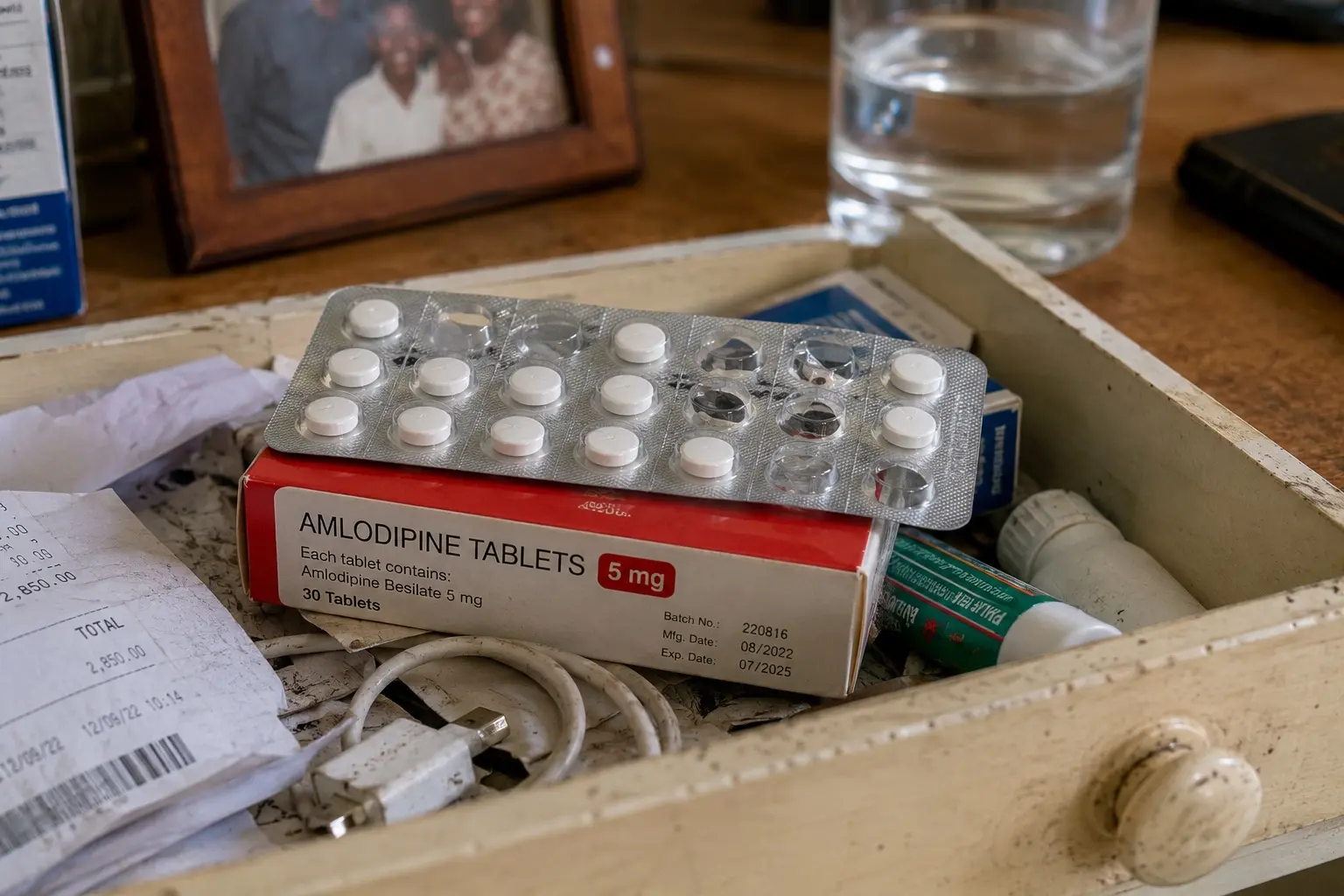
The useful habit is to keep the information that makes follow up possible. A receipt, original packaging and batch details give the dispensing professional or regulator a starting point. A loose tablet in an unlabelled bag leaves much less to investigate.
- Check that the medicine, strength and instructions match what the prescribing professional intended.
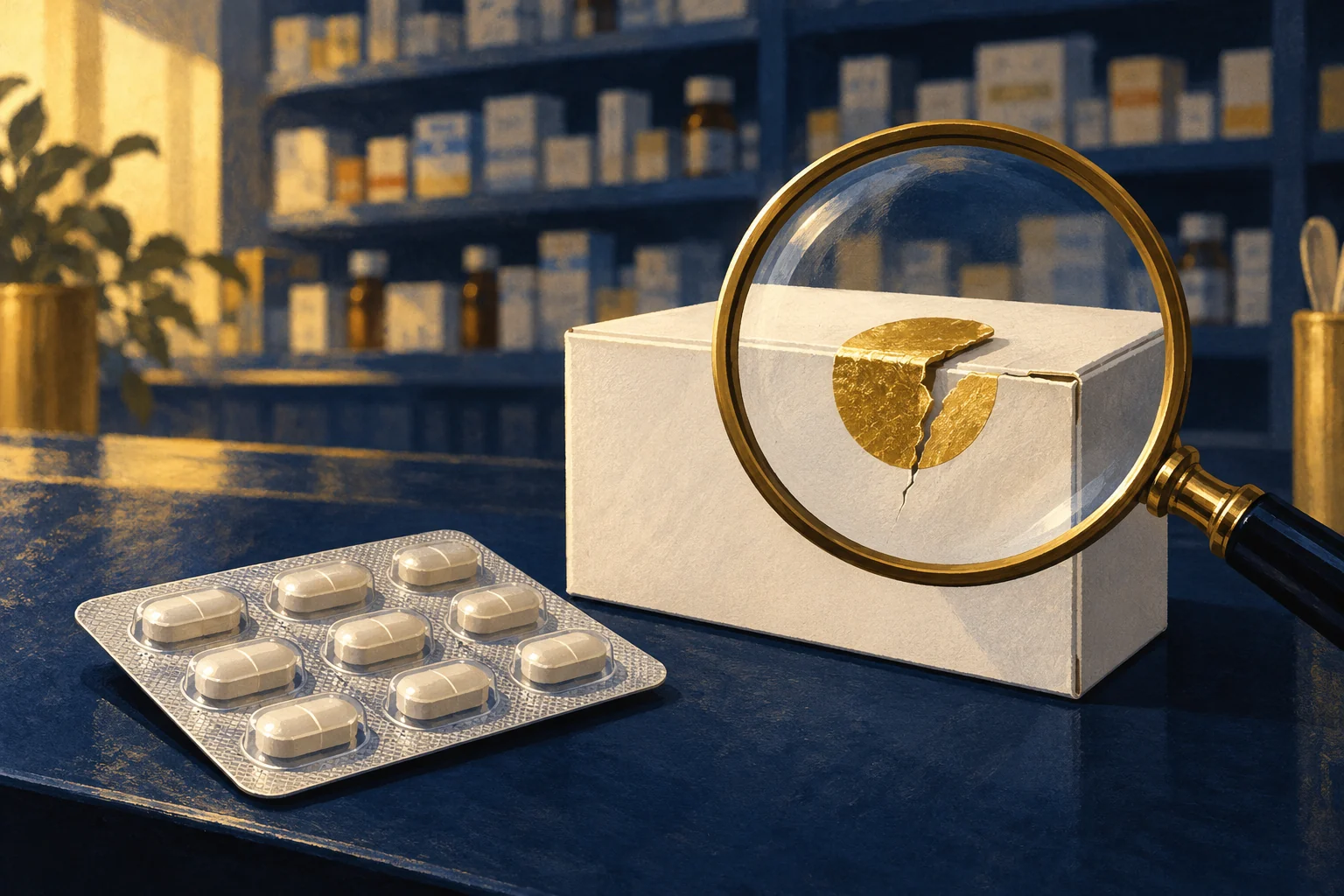
- Look for damaged packaging, broken seals, unusual appearance and inconsistent batch or expiry information.
- Keep the receipt and packaging. Ask for an explanation of any change in brand or presentation.
- Treat dramatic cure claims, pressure to pay immediately and unexplained discounts as reasons to pause and verify.
If you are worried, ask for help promptly
A medicine that seems ineffective or causes an unexpected reaction deserves a conversation with a pharmacist or clinician. WHO advises reporting suspected poor quality or falsification to the national medicines regulator. Severe or rapidly worsening symptoms require urgent medical care; a product investigation should not delay that care.
In Nigeria, NAFDAC's Consumer Safety page links to reporting routes for adverse reactions, suspected criminal activity, complaints and enquiries. Its Greenbook also provides a suspected substandard or falsified product report form. Use the official channels and retain the information you supplied.
Do not turn suspicion into an unsupervised change of treatment. The right response may require replacement medicine and clinical review. A person should not be left choosing between taking a questionable product and losing access to essential treatment altogether.
The burden cannot end with the buyer
CHA Health's assessment is that public advice should be paired with visible accountability. Regulators and suppliers should make it easy to find current alerts, identify affected batches, obtain safe replacements and understand what an investigation concluded. Public reporting should explain the denominator behind any claimed success.
A large seizure is evidence of an enforcement action. It is not, on its own, a measurement of the share of all medicines that are unsafe. A successful response should also show how quickly an alert reached dispensers and what happened to patients who had already received the product.
For Nigeria, the question worth returning to is simple: can a patient move from doubt to competent help without paying for the same failure twice? International agreements will become meaningful when that route becomes shorter, clearer and dependable.
Sources & further reading
CHA Health uses named, traceable sources. Links open the original institutional material.
- World Health Organization · 16 October 2026INTERPOL and WHO sign agreement to strengthen global health and security protection
- World Health Organization · 3 December 2024Substandard and falsified medical products: definitions, risks and scope
- INTERPOL · 7 May 2026Operation Pangea XVIII: global crackdown on illicit pharmaceuticals
- World Health OrganizationAdvice to patients and consumers
- NAFDAC · checked 19 October 2026Drugs: registration and the registered drug database
- NAFDAC · checked 19 October 2026Greenbook registered drug database
- NAFDAC · checked 19 October 2026Consumer safety and reporting routes
- NAFDAC GreenbookReport a suspected substandard or falsified product

Read thoughtfully.
Respond constructively.
Loading discussion…