

A vaccine can exist and still not be the right key for the virus at the door. The largest recorded Bundibugyo virus outbreak is forcing Africa to confront that difference in real time, while Nigeria prepares for a risk that must be taken seriously without being exaggerated.
The sentence that changes the story
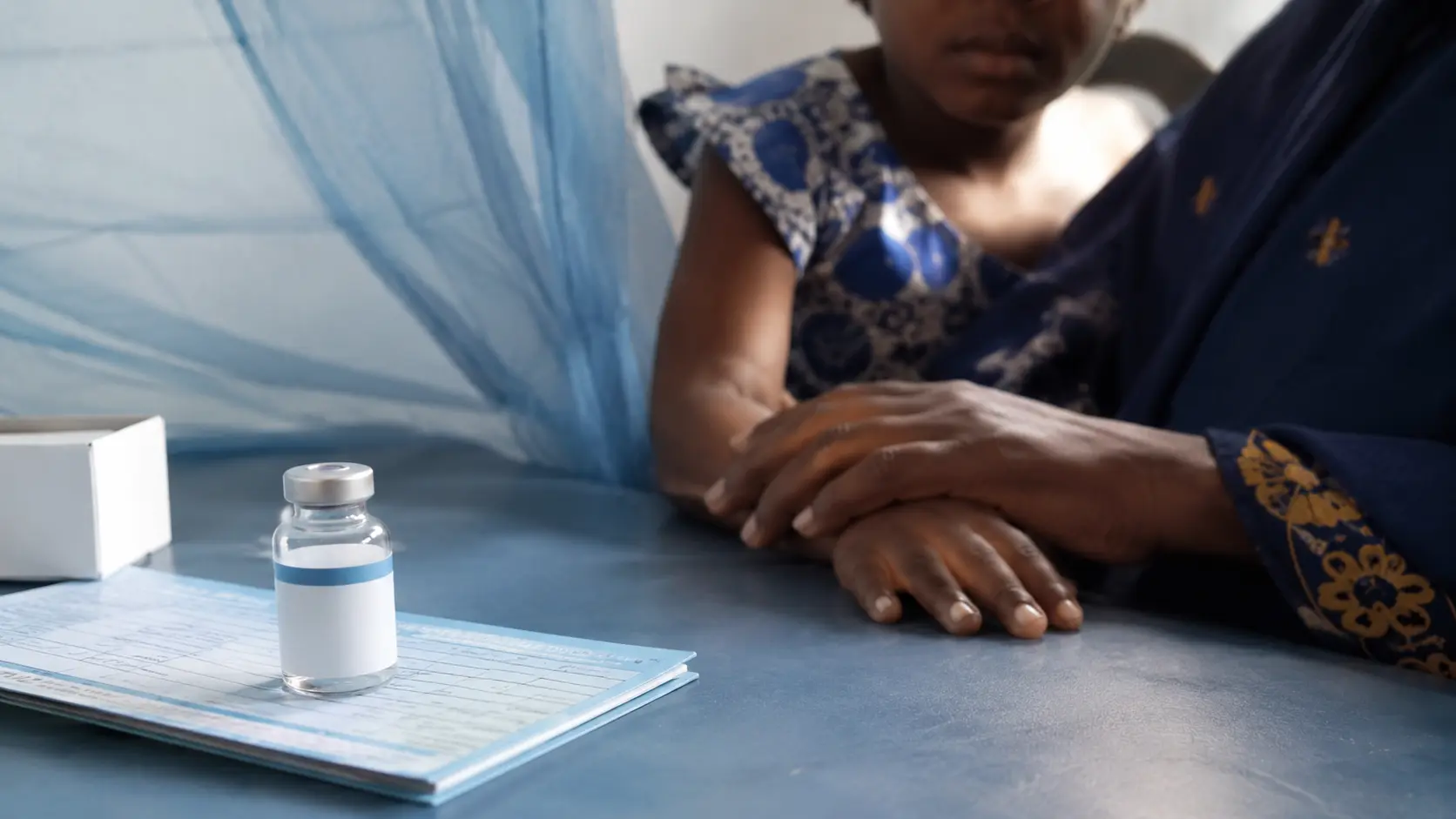
There is an Ebola vaccine. There is also an Ebola outbreak for which no vaccine has yet been proven to work.
Those statements sound contradictory only because the word Ebola is doing too much work. It describes a serious disease caused by several related viruses. The vaccine most people have heard about, Ervebo, is licensed for Zaire ebolavirus. The outbreak spreading through the Democratic Republic of the Congo in 2026 is caused by Bundibugyo virus.
The distinction is not academic. It changes what health workers can promise, how vaccination can be used, what researchers must still discover and what countries such as Nigeria should prepare to do if a suspected case arrives.
WHO’s emergency committee said approximately 5,000 cases had been reported in the Democratic Republic of the Congo by 18 August 2026. The organisation has kept the outbreak classified as a Public Health Emergency of International Concern, but not a pandemic emergency. It also assessed the risk of international spread outside Africa as very low at that time.
That is the balance this story requires. The outbreak is grave. It is not permission to manufacture panic.
Ebola is a family name, not one virus
The viruses that cause Ebola disease belong to the orthoebolavirus group. Zaire, Sudan and Bundibugyo viruses can all cause severe illness in people, but they are not interchangeable versions of one biological target.
A vaccine teaches the immune system to recognise particular features. If the virus in circulation is sufficiently different from the one used to design the vaccine, protection cannot be assumed merely because both diseases carry the Ebola name.
This is why public communication must be precise. Saying that there is an Ebola vaccine without naming the virus species can create false reassurance. Saying that there is no vaccine at all erases a major scientific achievement against Zaire ebolavirus. The responsible sentence is narrower: there is currently no licensed vaccine proven to prevent Bundibugyo virus disease.
The same limit applies to treatment. WHO states that approved antibody therapies are available for disease caused by Zaire ebolavirus, while no approved specific therapy exists for Bundibugyo virus disease. Patients can still receive intensive supportive care, including fluids, management of symptoms and treatment of complications. Supportive care is active medicine, not surrender, but it is not the same as a virus-specific cure.
Why use Ervebo if its protection is unknown?
Because unknown is a question that can sometimes be answered, but only if uncertainty is treated honestly.
On 20 August, WHO and Africa CDC announced an initial allocation of 70,000 Ervebo doses requested by the Democratic Republic of the Congo. Twenty thousand were intended for a Phase 3 vaccine trial. The announcement also described 50,000 doses for frontline and healthcare workers under the recommendations available at that moment.
The evidence then had to be translated into stricter operational guidance. WHO’s updated emergency recommendation, published on 1 September, said laboratory and animal findings suggest possible cross protection, but the evidence is insufficient to establish clinically meaningful protection in humans. It recommended using the vaccine against Bundibugyo only within research protocols, including a randomised ring vaccination trial.
That chronology matters. It is not evidence of confusion so much as evidence of a response adapting while science develops. An allocation is not proof that a vaccine works. A plausible biological signal is not the same as demonstrated protection in people. And a research protocol is not an ordinary vaccination campaign.
Participants must be told what is known and what is not. Communities must understand that receiving an injection does not remove the need for monitoring, infection prevention or early reporting of symptoms. Researchers must be able to learn from the trial without allowing the language of hope to become a guarantee.
The medicine gap makes ordinary public health extraordinary
When there is no proven vaccine or specific treatment, the familiar tools become the decisive ones: find cases early, confirm them in a laboratory, isolate safely, trace contacts, protect health workers, care for patients, conduct safe and dignified burials, and communicate well enough that communities continue to cooperate.
None of these tasks is simple in the setting WHO has described. The outbreak has moved across multiple provinces and health zones. Conflict, population displacement, insecurity and restricted access have interrupted surveillance and healthcare. By 30 July, WHO had recorded 151 confirmed infections among health workers and 44 deaths in that group, a warning that infection prevention failures can weaken the very workforce needed to stop transmission.
Ebola is not airborne. It spreads through direct contact with the blood or other body fluids of a person who is ill or has died, through contaminated materials, or through infected animals. A person does not transmit the virus before symptoms begin. Those facts should reduce indiscriminate fear, but they do not make the response easy. Caring for a sick person, cleaning a contaminated space or preparing a body for burial can create intense exposure if protection and training fail.
The early symptoms can also resemble far more common illnesses: fever, weakness, headache, muscle pain, vomiting or diarrhoea. In Nigeria, where malaria and Lassa fever are familiar diagnostic considerations, exposure history and rapid laboratory referral can determine whether a rare threat is recognised before more people are placed at risk.
What the outbreak means for Nigeria
Nigeria had no confirmed Bundibugyo virus disease case when NCDC issued its national advisory on 28 May 2026. The agency nevertheless assessed the risk of importation as high because regional transmission, air and sea travel, porous borders, informal crossings and cross-border trade can connect an outbreak to places far beyond the first cluster.
NCDC activated its national Emergency Operations Centre in alert mode and asked states and health facilities to strengthen readiness. That is appropriate. Preparedness is most effective before a frightened patient reaches a crowded waiting room.
But readiness is not a poster at an airport. It is the nurse who asks the right travel and exposure questions. It is a triage system that separates a possible case without abandoning the patient. It is protective equipment in the correct place, a trained team that can use it safely, a specimen transport route, a laboratory that can return a reliable result, and a contact list created before memory and trust begin to fail.
It is also communication that refuses two dangerous shortcuts. The first is reassurance so vague that people do not know when to seek help. The second is fear so indiscriminate that travellers, Congolese people or healthcare workers become targets of stigma. Both undermine cooperation. Neither stops a virus.
- Keep emergency departments and primary care facilities alert to relevant travel and contact history without assuming that every fever is Ebola.
- Protect health workers through practical infection prevention training, supplies, supervision and rapid reporting after possible exposure.
- Maintain laboratory referral and specimen transport systems that work beyond major tertiary hospitals.
- Coordinate points of entry with state surveillance teams so a travel alert becomes a clinical response rather than an isolated form.
- Publish regular, dated public updates that distinguish suspected, probable and laboratory confirmed cases.
What Nigerians should do, and what they should not
For most people in Nigeria, the correct response is awareness rather than alarm. There is no reason to avoid ordinary contact with someone because of nationality, travel history alone or the rumour that a person came from an affected region. Ebola does not spread through the air, and people are not infectious before symptoms begin.
The threshold changes when symptoms and a credible exposure occur together. Someone who develops fever or other compatible symptoms within 21 days of direct contact with a person suspected or confirmed to have Ebola, their body fluids, contaminated materials or an unsafe burial should avoid close contact with others and seek official health guidance immediately. Calling ahead allows a facility or public health team to prepare safely.
People should not buy or request an Ebola vaccine privately on the assumption that any product carrying the name will protect against Bundibugyo virus. They should not circulate images of suspected patients, home addresses or unverified case lists. And they should not attempt to care for a suspected case without trained assistance and protective measures.
The incubation period can be as long as 21 days. Monitoring a contact is therefore a public health task with a defined time frame, not a permanent label attached to a person or community.
The larger African question is who gets to own the evidence
WHO now describes Bundibugyo as one of the least studied orthoebolaviruses. Its September research agenda identifies priorities across diagnostics, clinical management, treatments, vaccines, community engagement and post-exposure prevention. That list reveals a deeper inequality: some of the world’s most dangerous pathogens remain scientifically neglected until an African emergency creates the conditions in which evidence can finally be generated.
Research during an outbreak can be lifesaving. It can also ask exhausted communities to carry the burden of uncertainty. The ethical answer is not to stop research. It is to ensure informed consent, independent oversight, African scientific leadership, transparent results and a credible path for affected countries to receive the products that prove effective.
The Democratic Republic of the Congo should not be treated merely as the location of a trial. Its researchers, health workers and communities are producing knowledge the world will depend on if Bundibugyo virus appears again. That contribution deserves authorship, investment, laboratory capacity and long-term access, not gratitude that expires when the emergency headline fades.
The lesson is not that vaccines failed
Ervebo did not fail against a virus it was never proven to prevent. The failure would be pretending that the word Ebola makes every ebolavirus biologically identical, or treating uncertain cross protection as if it were an established fact.
The 2026 outbreak is testing two systems at once. One is the emergency response: whether cases can be found, patients cared for, health workers protected and transmission interrupted under severe operational pressure. The other is the research system: whether a promising vaccine can be evaluated quickly, ethically and clearly enough to answer a question the world postponed for too long.
Nigeria’s task is different but connected. It must prepare without announcing an outbreak that does not exist, watch without stigmatising, and make the chain from border surveillance to bedside care strong enough that a suspected case does not become a missed one.
A vaccine may eventually become another layer of protection against Bundibugyo virus. Until evidence says so, Africa cannot afford to let the existence of an Ebola vaccine obscure the harder truth: the right vaccine, for the right virus, delivered with the right public health system, is what saves lives.
Sources & further reading
CHA Health uses named, traceable sources. Links open the original institutional material.
- World Health Organization — Disease Outbreak NewsEbola disease outbreak in the Democratic Republic of the Congo
- WHO Regional Office for AfricaEbola disease outbreak in DRC, 2026
- World Health OrganizationSecond meeting of the IHR Emergency Committee on the epidemic of Bundibugyo virus disease in DRC
- World Health OrganizationEmergency guidance on candidate vaccines in response to the 2026 Bundibugyo outbreak
- World Health Organization and Africa CDCWHO and Africa CDC welcome allocation of Ebola vaccines to DRC
- World Health OrganizationGlobal research and development priorities for Bundibugyo virus disease
- Nigeria Centre for Disease Control and PreventionNational public health advisory on state preparedness for Bundibugyo Ebola virus disease
- Africa Centres for Disease Control and PreventionBundibugyo virus disease outbreak
- World Health OrganizationEbola disease: key facts

Read thoughtfully.
Respond constructively.
Loading discussion…