
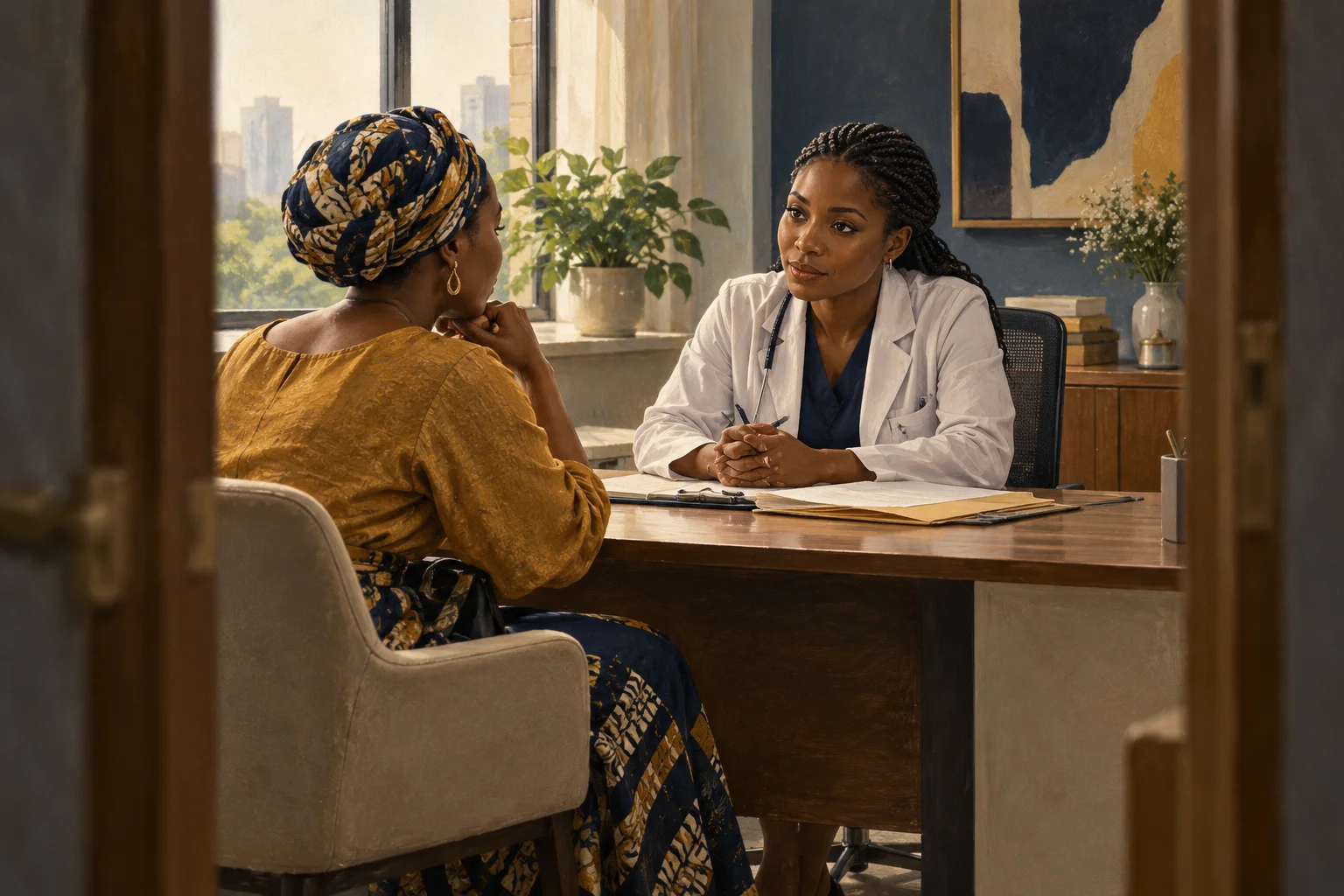
A mammogram is useful. A diagnosis is essential. Neither can save a life on its own if the next appointment, medicine or journey to a treatment centre is out of reach.
From an announcement to a patient’s appointment
In Breast Cancer Awareness Month, the National Health Insurance Authority is asking women to seek care early when they notice an unusual breast change. It is also pointing to expanded insurance benefits and a partnership intended to lower the price of selected cancer medicines. THISDAY reported the announcement on 5 October.
The appeal makes sense. A painless lump is easy to postpone, especially when a family fears what it will cost to learn the answer. But an awareness campaign only succeeds when the health system can take someone from a concern to an assessment, a reliable diagnosis and timely treatment.
That is the real test of Nigeria's new cancer response.
What has actually changed?
The NHIA says more than 23 million Nigerians are enrolled in national health insurance. Its expanded arrangement with Roche is meant to improve access to selected oncology medicines through shared costs. The authority also identifies mammography, CT and MRI scans, cancer diagnostics and radiotherapy within its benefits and payment structure.
THISDAY describes a particular medicine payment arrangement in which Roche meets 50% of the price, NHIA 30% and the eligible patient 20%. That is a potentially substantial reduction for a qualifying medicine. It is not a promise that every patient pays only 20% of all cancer care. Eligibility, the specific medicine, the facility and the applicable benefit package matter. Patients should ask their NHIA desk or treating hospital to confirm those details before making financial decisions.
The Federal Ministry of Health and Social Welfare's cancer programme lists another access measure: the Cancer Access Partnership places 27 anticancer medicines in 48 formulations across 14 federal tertiary hospitals. The ministry also describes a Cancer Health Fund for eligible indigent patients with breast, cervical and prostate cancers at six federal teaching hospitals.
These are different routes to care. A medicine being available in a programme is not the same thing as every patient qualifying for it at every hospital.
The number that needs a date beside it
The THISDAY report cites an estimate of 32,278 new breast cancer cases and 16,332 deaths in Nigeria. Those figures belong to the earlier GLOBOCAN 2022 estimate. The International Agency for Research on Cancer's newer Nigeria fact sheet, released in September 2026 and estimating the burden in 2024, lists 44,196 new breast cancer cases and 21,309 deaths. Breast cancer ranks first among cancers in Nigerian women in that estimate.
Both sets are modelled estimates for different reference years. They should be labelled with their years; they should not be read as a measured two-year jump without considering changes in data and estimation methods. The newer estimate nevertheless reinforces the scale of the work ahead.
Detection has to lead somewhere
The World Health Organization distinguishes early diagnosis, where a person with symptoms gets evaluated promptly, from screening, which tests apparently healthy people. A woman who has already noticed a lump needs clinical assessment; she should not wait for a general screening campaign.
WHO advises assessment for a new lump or thickening even when it does not hurt. Other changes worth checking include a change in breast shape, skin dimpling, a change in nipple appearance and abnormal or bloody discharge. Most lumps are not cancer, but that conclusion needs appropriate evaluation rather than guesswork.
An earlier diagnosis can improve the chance of effective treatment. It does not remove the need for biopsy, surgery, medicines, radiotherapy or follow-up where those are indicated. WHO stresses that treatment can be less effective when a prescribed course cannot be completed.
Nigeria's government says four of six oncology centres being upgraded are operational: University College Hospital, Ibadan; University of Benin Teaching Hospital; University of Nigeria Teaching Hospital, Enugu; and Ahmadu Bello University Teaching Hospital, Zaria. That is an important capacity gain. The practical questions now concern waiting times, referrals, equipment uptime, medicine supply and what a patient outside those cities must spend to get there.
The questions patients should be able to ask
For someone seeking care, the policy language becomes more useful when a clinic can answer five ordinary questions:
Those answers are as important as an announcement of new funding. An effective cancer system helps the patient navigate the distance between the first worry and the last day of treatment.
- Where can I get this symptom assessed, and how quickly?
- If a test or biopsy is needed, which facility can perform it and when will I receive the result?
- Which services, medicines and hospitals does my insurance plan actually cover?
- If I qualify for NHIA support or the Cancer Health Fund, who helps me apply?
- If treatment is recommended, what is the full expected cost and what happens if a medicine is unavailable?
A measure of progress worth publishing
The NHIA's enrolment count tells us how many people have a route into an insurance scheme. The measure that will matter to a person with cancer is whether that coverage prevents a delayed diagnosis, an interrupted treatment or a household being pushed into severe financial hardship.
The cancer programme, the medicine arrangements and the oncology upgrades deserve scrutiny as they expand. CHA Health will look for public data on eligibility, patients treated, time to diagnosis, treatment completion, geographic access and patients' actual out-of-pocket costs. Those figures would show whether Nigeria's response reaches people beyond the policy announcement.
Sources & further reading
CHA Health uses named, traceable sources. Links open the original institutional material.
- National Health Insurance Authority · September 2026NHIA enrolment hits 23 million as cancer coverage expands
- Federal Ministry of Health and Social WelfareNational Cancer Control Programme
- International Agency for Research on Cancer · September 2026Nigeria fact sheet, GLOBOCAN 2024
- World Health OrganizationBreast cancer: key facts, signs and treatment
- THISDAY · James Emejo · 5 October 2026NHIA urges early detection as FG steps up cancer response


Read thoughtfully.
Respond constructively.
Loading discussion…