

Nigeria has confirmed an Ebola case in Abuja. That deserves immediate attention. It also demands precision: an identified contact is not a confirmed infection, a flight route does not establish where infection occurred, and a serious disease is not a reason to abandon people who need care.
Ebola in Abuja: the confirmed facts at a glance
The Federal Ministry of Health and Social Welfare confirmed the FCT case on 20 October. Its statement says the patient is in isolation and receiving care. The ministry, NCDC and FCT health authorities are coordinating the response.
- Confirmed cases in the announcements checked: one. The 44 people identified as contacts are not 44 additional cases.
- WHO identifies the infection as Bundibugyo virus disease, one of the diseases grouped under Ebola.
- The patient had recent travel through Uganda. WHO says the likely source of infection remains under investigation.
- The announcements do not establish widespread transmission across Abuja or Nigeria. Contact investigation must determine whether further infections have occurred.
Sources: Federal Ministry of Health and Social Welfare · 20 October 2026 · WHO Regional Office for Africa · 20 October 2026
What happened, and why the timeline matters
WHO reports that symptoms began on 7 October, four days after the woman's arrival in Nigeria. She sought care at a private health facility in Abuja on 11 October. Laboratory confirmation followed on 20 October. Investigators are reconstructing her travel and exposure history.
That interval makes careful contact tracing essential. It does not tell an outside observer which encounter transmitted an infection or whether any particular contact became infected. Those are investigation and testing questions, not conclusions to draw from a calendar.
WHO says NCDC has activated its incident management system. The immediate task is to find possible exposures, support follow-up and prevent onward transmission. Being identified for monitoring is a protective measure, not an accusation.
How Ebola spreads—and what being in Abuja does not mean
CDC explains that infection can occur when blood or other body fluids from someone ill with Ebola, or someone who has died from it, enter broken skin or the eyes, nose or mouth. Contaminated bedding, clothing and medical equipment can also transmit infection. Caring for a sick person without suitable protection is therefore a different situation from simply living in the same city.
Ebola is not spread through the air in the way influenza or COVID-19 can spread. People do not transmit it before symptoms begin. Survivors can sometimes carry the virus in certain body sites after recovery and need individual follow-up advice; that is not a justification for excluding them from community life.
Nationality, a neighbourhood name or a photograph on WhatsApp cannot establish exposure. An actual assessment asks what contact occurred, when it occurred and whether infectious material was involved.
Sources: US Centers for Disease Control and Prevention · 2 June 2026
Ebola symptoms: do not wait for bleeding
Symptoms can develop between two and 21 days after infection. Early illness can include fever, pronounced weakness, headache, muscle aches and sore throat. Vomiting, diarrhoea and abdominal pain can follow. CDC notes that early symptoms can resemble several more common infections, including malaria and typhoid.
WHO emphasises that bleeding is less frequent than many people assume and can occur later. Waiting for bleeding before reporting a concerning illness is unsafe. Equally, fever alone does not prove that somebody has Ebola: diagnosis requires an appropriate clinical assessment and laboratory testing.
Tell a health professional about recent travel, contact with a suspected or confirmed patient, contact with body fluids, or participation in an unsafe burial. The exposure history helps the team decide what assessment and precautions are needed. A social media symptom checklist cannot replace that process.
Sources: US Centers for Disease Control and Prevention · World Health Organization · Fact sheet
Symptoms after a possible exposure? Call before you travel for care
If you develop compatible symptoms after possible Ebola exposure, avoid close physical contact and contact public health services immediately. Call NCDC's toll-free Connect Centre on 6232. Its published alternatives are SMS 0809 955 5577 and WhatsApp 0708 711 0839. Explain your symptoms, where you are and the exposure or travel history.
Ask for instructions for assessment and safe transfer. Call ahead before arriving at a facility, so staff can prepare. Do not move from clinic to clinic or organise a group of relatives to accompany you while seeking an answer. Do not attempt unprotected home care or handle potentially contaminated body fluids, clothing or bedding.
If you are identified as a contact while feeling well, remain reachable and follow the response team's monitoring and movement instructions. Monitoring commonly covers 21 days after the last relevant exposure. Do not wait for the next scheduled follow-up if symptoms appear. Seek urgent assistance immediately for serious deterioration.
Sources: Nigeria Centre for Disease Control and Prevention · Nigeria Centre for Disease Control and Prevention · PDF · WHO Regional Office for Africa · Outbreak information and FAQs
What Nigerian households can do to prepare today
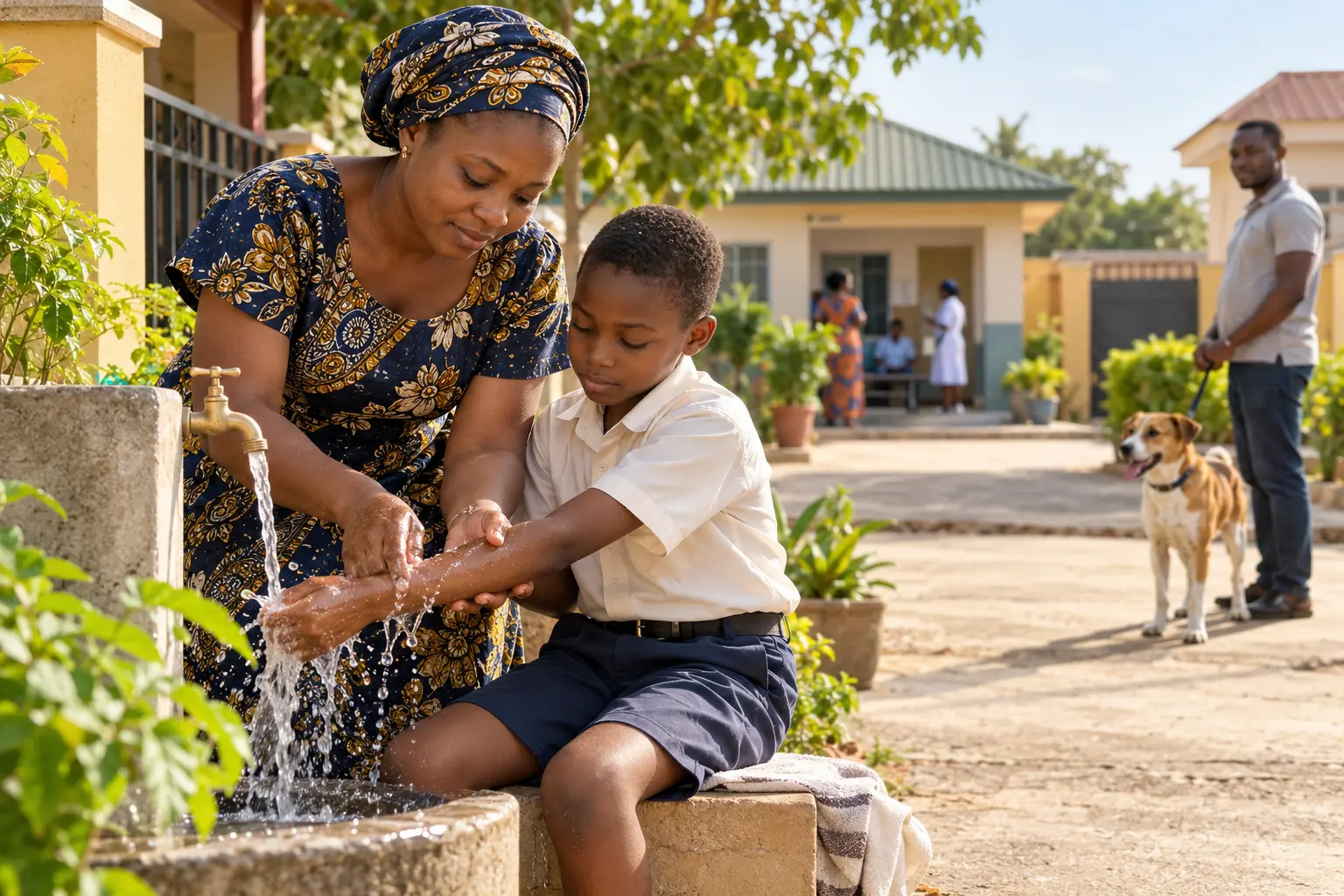
WHO's community guidance centres on hand hygiene, avoiding unsafe contact, early referral and cooperating with contact follow-up. It also warns against touching or bringing home wild animals found dead. Preparation should make those actions possible in ordinary homes.
CHA's practical recommendation is a short household plan. It is more useful than panic buying: know whom to call, make sure a family member can describe a relevant exposure clearly, and decide how to support somebody who is instructed to remain apart from others.
- Save 6232 and the NCDC SMS number. Keep soap, water and a working phone available.
- Know where to obtain official updates: NCDC, the FCT health authorities, the Federal Ministry of Health and WHO.
- Help a contact comply with official instructions through phone check-ins and practical arrangements agreed with the response team. Do not organise visitors.
- Do not wash or prepare the body of someone suspected to have died from Ebola. Seek the public health team's safe and dignified burial instructions.
- Share official, dated guidance in language relatives understand. Do not circulate patient photographs, names or guessed hospital lists.
Sources: Nigeria Centre for Disease Control and Prevention · WHO Regional Office for Africa · Outbreak information and FAQs
Can an Ebola vaccine protect against this Bundibugyo case?
An Ebola vaccine is not automatically a vaccine proven against every Ebola-causing virus. WHO's updated emergency guidance, published on 1 September 2026, says evidence is insufficient to establish whether Ervebo provides clinically meaningful protection against Bundibugyo in humans. It recommends use against this virus only within research protocols.
A trial or vaccine shipment is not proof of protection. Readers should not buy a supposed Ebola vaccine privately or assume that receiving a different Ebola vaccine removes the need for public health precautions.
The absence of a proven Bundibugyo-specific medicine does not mean care is futile. WHO says early supportive treatment, including management of fluid loss and other symptoms, improves survival. Suspected illness needs a prepared clinical team, not a product advertised as a guaranteed cure.
Sources: World Health Organization · 1 September 2026 · World Health Organization · Fact sheet
Hospitals, schools and workplaces: make the response workable
The ministry has asked public and private health facilities nationwide to stay alert, identify and isolate suspected cases promptly, use strict infection prevention measures and notify public health authorities. A protective system must include the first small clinic a patient enters, not only a specialist hospital.
CHA's editorial recommendation for facility managers is to check the referral telephone number, triage procedure, staff training and availability of appropriate protective supplies now. A written plan has limited value if the person at reception cannot activate it.
For schools and employers, establish a confidential route for reporting relevant exposure and cooperate with official instructions. Make communications usable for people with disabilities and people who cannot easily read a long English notice. If someone must restrict movement, discuss practical support so compliance does not depend on pretending to be well. These are preparedness recommendations, not a claim that authorities have ordered nationwide closures.
Sources: Federal Ministry of Health and Social Welfare · 20 October 2026
What we still do not know—and what officials should explain next
The immediate announcements leave important questions open: where did infection occur, have all relevant contacts been reached, and will investigation identify secondary cases? A useful update should distinguish people identified, people successfully followed up, people with symptoms and people with laboratory-confirmed infection.
CHA's editorial view is that the public also needs a dependable route to care: who answers an alert, how a safe referral is arranged and what support is available to contacts. Those questions turn a national announcement into something a family can act on.
Absence of a published answer is not proof of concealment. Nor should uncertainty be replaced by reassurance that cannot be substantiated. We will distinguish what a source confirms from what an investigation has yet to establish.
Quick answers: cases, travel and seeking help
Are there 44 Ebola cases in Abuja? No. The releases checked report one confirmed case and 44 identified contacts. Contacts require follow-up; they are not automatically infected.
Should everyone leave Abuja or stop routine medical care? The confirmation alone is not evidence for either action. WHO's 20 October release advises against travel or trade restrictions affecting countries concerned. People under individual monitoring must follow their own public health instructions.
What is the most useful action if I become ill after possible exposure? Avoid close contact and call 6232 immediately for instructions. Tell the team about the exposure before travelling for care.
Sources: Federal Ministry of Health and Social Welfare · 20 October 2026 · WHO Regional Office for Africa · 20 October 2026 · Nigeria Centre for Disease Control and Prevention · Nigeria Centre for Disease Control and Prevention · PDF
The response is measured in trust as well as speed
A person who fears public humiliation may delay reporting symptoms. A worker who cannot afford to miss a shift may find monitoring difficult. A family that receives clear instructions and practical support has a better chance of following them. Those are reasons to communicate carefully and make cooperation possible.
Nigeria needs a response that is fast enough to interrupt transmission and clear enough for people to trust. Share verified guidance. Report relevant symptoms and exposure promptly. Protect healthcare workers, patients and contacts from both infection and stigma. That is what preparation should accomplish.
Sources & further reading
CHA Health uses named, traceable sources. Links open the original institutional material.
- Federal Ministry of Health and Social Welfare · 20 October 2026FCT case confirmation and activation of the public health response
- WHO Regional Office for Africa · 20 October 2026Nigeria confirms imported case of Ebola Bundibugyo virus disease
- US Centers for Disease Control and Prevention · 2 June 2026How Ebola disease spreads
- US Centers for Disease Control and PreventionSigns and symptoms of Ebola disease
- World Health Organization · Fact sheetEbola disease: symptoms, diagnosis and supportive care
- World Health Organization · 1 September 2026Updated emergency guidance on Ervebo during Bundibugyo outbreaks
- Nigeria Centre for Disease Control and PreventionNCDC Connect Centre: official telephone, SMS and WhatsApp contacts
- Nigeria Centre for Disease Control and Prevention · PDFGeneral Ebola self-isolation and contact guidance (older background document)
- WHO Regional Office for Africa · Outbreak information and FAQsBundibugyo outbreak: community precautions and contact follow-up

Read thoughtfully.
Respond constructively.
Loading discussion…